...so what is it doing in a Moosewood Cookbook? The Moosewood Cookbook, and its spinoffs - The Enchanted Broccoli Forest, Sundays at the Moosewood Restaunt, and The Moosewood Restaurant Cooks at Home among others, are classics of the vegetarian cooking genre. Fifteen years ago James bought me the Cooks at Home Cookbook before he left on a 3-month sojourn to the Amazon. Knowing that I did't like to cook just for myself, he selected it because it featured good meals that could be made in 30 minutes or less. Like the rest of the Moosewood series this is a vegetarian cookbook. There is not much of explanation in the book as to why fish recipes are included, except to say that some vegetarians will eat fish.
This week our family decided to eat what we had on hand,before doing more food shopping. I knew we had fish fillets in the freezer so we decided to find a fish recipe that incorporated ingredients we already had, or that we could easily substitute and selected Asian Fish in a Packet. Ingredients include:
Scallions - we substituted the rest of the baby onions we had left from our Julia Child recipe.
Garlic - good thing I still had some frozen cloves from the CSA farm box
Fresh Ginger- bought recently for another recipe
Dark Sesame Oil - I had light Sesame Oil, although I can't imagine why.
Bok Choi - There was probably some of this in the frozen mixed greens I still had from last summer's CSA farm box.
Soy Sauce - Worcestershire sauce was substituted
Rice - Always on hand at the H-B home.
The fish was layered on top of the cooked rice and greens, then a mixture of the rest of the ingredients was spread on top of each fillet and everything was wrapped into a foil packet, and cooked for 20 minutes at 450 in our new convection oven. These turned out perfectly. Delicious and tender. We opened a bottle of sparkling white wine to pair with this spicy meal.
Showing posts sorted by relevance for query moosewood. Sort by date Show all posts
Showing posts sorted by relevance for query moosewood. Sort by date Show all posts
Thursday, March 3, 2011

Thursday, September 17, 2015
Our Most Important Libro de Recetas
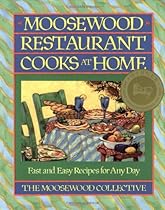
 Moosewood Restaurant Cooks at Home: Fast and Easy Recipes for Any Day by Moosewood Collective
My rating: 5 of 5 stars
This may be the most important book in our kitchen. When I was getting ready for my dissertation research -- three months in the Amazon without my sweetheart -- we already had the "regular" Moosewood. We liked it, but also knew that most of its recipes were a bit of work. Pam wanted to eat well while I was gone, but we needed something convenient enough for a cooking-for-one lifestyle.
This was just the ticket -- great, simple recipes for anyone who would like to have healthy meals on a weeknight.
View all my reviews
Monday, October 22, 2012
Lively Green Beans
 |
| Image from The Captain's Vintage, via eBay. See note below. |
Not Your Mother's Green Beans is one of our standards from the "Mini Moosewood" which is the second-most important item on our cookbook shelf. (See our Moosewood explanatiblon or a complete list of Moosewood mentions on this blog.)
The title of the recipe refers, of course, to green-bean comfort food with which many people -- especially Southern people -- are familiar. If any vitamins, crispness, or vegetable flavor remains in traditional green beans, it is because there were not enough hours to finish cooking them -- preferably in salt and fatty bacon. The result was often welcome in a guilty-pleasure sense, but it is just not right to have green vegetables more fattening than burgers, which is where Mollie Katzen's crew comes in.
On page 82 of the Mini Moosewood is the following simple recipe.
- Toast 1/2 cup pine nuts (we usually use chopped walnuts) and steam 1 pound of green beans.
- In a medium bowl, combine 1 large shallot or 1/4 cup chopped scallions (Pam used a leek yesterday) with 1/4 cup balsamic vinegar and 1/4 cup olive oil. Mix in 2 tablespoons parsley or basil.
- Drain the beans, toss with dressing and nuts, and top with salt (minimal) and pepper.
This can either be served warm or chilled for at least 20 minutes. We look forward to sharing this with our friends at Lebherz Oil and Vinegar Emporium, to see if they can recommend special suggestions for the dressing. We will post ideas here.
Now for that image: when I was about 10 or 12, my grandmother bought me (and I think my brother) a t-shirt with this design. For some reason, I loved it and wore it as often as I could for far more years than I should have. The best part: it was scratch-and-sniff. That's right; years before being a genuine foodie, I willingly walked around smelling like green beans.
Lagniappe
Just in time for Thanksgiving 2015, NPR reported on the origins of the more traditional, gloppy version that originated 60 years ago in a lab in New Jersey, and on the academic scholarship that explore its cultural geography.
Monday, April 16, 2012
Sweet Potato Quesadillas
I thought of using a clever title that refers to this being an Old Faithful recipe on our Nueva Receta blog, but I chose a simple title in hopes that people can find this, one of our very favorite recipes. It is healthy, high-fiber, vegetarian, and easily made vegan. It comes -- as so many good things do -- from Moosewood Restaurant Cooks at Home: Fast and Easy Recipes for Any Day, which visitors to our home know simply as "Mini Moosewood."
I have prepared this so often that I cannot even be sure how far it may have departed from the original in its details. I can tell you that it requires an indispensable cast-iron skillet and a cast-iron griddle or large pan.
It works like this, in two stages.
First, peel and then shred some sweet potatoes (or yams; please tell me if you honestly know the difference) as you heat up some oil in the pan. A serious shredder such as the one I mention in my "Gratin" article will pay for itself with this dish. Quantity? Whatever makes sense, plus a bit. I usually do one fairly large one for the two of us. Add to the hot oil and then add a diced onion. Add minced garlic if you are not forgetful (as I was this evening, but accidentally compensated with a garlic salsa). Add cayenne, chili powder, and cumin in abundance (all three, that is). Mini Moosewood says to cook it in one flat layer and scrape/flip it only once to avoid absorbing too much oil, but with a good olive oil, I don't see the point.
Second, assemble this with on the best tortillas (one big one each, or a couple of small ones) as you heat a small amount of oil on a griddle or in a large skillet. Having rinsed and dried the shredder (or using another face of it), shred a generous helping of cheese. I use the sharpest cheddar at hand (usually from Cabot cooperative in Vermont) and sometimes a bit of Monterrey Jack (also usually from Cabot). This evening we used aged Lite Sharp Celtic Cheddar and Monterrey Jack, both from Trader Joe's, to very good effect. With the sweet potato mixture on one half of each tortilla and the cheese on top of that, fold each one over and put on the hot griddle, flipping when browned. Top with a good salsa (we used Green Mountain Gringo garlic this evening, but any good salsa will do) and either sour cream or plain yogurt.
As if this were not enough, tonight we added a third step, which was Pam's brilliance: sangria. I once scoffed at sangria as too sweet, but in the right circumstances, it is amazing -- and thrifty! Tonight it was Madria Sangria ("Tradicional/Fresh Citrus") with a chopped apple and a bit of Triple Sec. It was a good excuse to bring out our sangria pitcher and matching mugs (from Nantucket's best thrift shop) and the first outdoor dining of the season at Casa Hayes-Boh.
I have prepared this so often that I cannot even be sure how far it may have departed from the original in its details. I can tell you that it requires an indispensable cast-iron skillet and a cast-iron griddle or large pan.
 |
| Photo added at Cloverfield during global pandemic March 23, 2020 |
First, peel and then shred some sweet potatoes (or yams; please tell me if you honestly know the difference) as you heat up some oil in the pan. A serious shredder such as the one I mention in my "Gratin" article will pay for itself with this dish. Quantity? Whatever makes sense, plus a bit. I usually do one fairly large one for the two of us. Add to the hot oil and then add a diced onion. Add minced garlic if you are not forgetful (as I was this evening, but accidentally compensated with a garlic salsa). Add cayenne, chili powder, and cumin in abundance (all three, that is). Mini Moosewood says to cook it in one flat layer and scrape/flip it only once to avoid absorbing too much oil, but with a good olive oil, I don't see the point.
Second, assemble this with on the best tortillas (one big one each, or a couple of small ones) as you heat a small amount of oil on a griddle or in a large skillet. Having rinsed and dried the shredder (or using another face of it), shred a generous helping of cheese. I use the sharpest cheddar at hand (usually from Cabot cooperative in Vermont) and sometimes a bit of Monterrey Jack (also usually from Cabot). This evening we used aged Lite Sharp Celtic Cheddar and Monterrey Jack, both from Trader Joe's, to very good effect. With the sweet potato mixture on one half of each tortilla and the cheese on top of that, fold each one over and put on the hot griddle, flipping when browned. Top with a good salsa (we used Green Mountain Gringo garlic this evening, but any good salsa will do) and either sour cream or plain yogurt.
As if this were not enough, tonight we added a third step, which was Pam's brilliance: sangria. I once scoffed at sangria as too sweet, but in the right circumstances, it is amazing -- and thrifty! Tonight it was Madria Sangria ("Tradicional/Fresh Citrus") with a chopped apple and a bit of Triple Sec. It was a good excuse to bring out our sangria pitcher and matching mugs (from Nantucket's best thrift shop) and the first outdoor dining of the season at Casa Hayes-Boh.
 |
| Yes, our sangria kit matches our cookie jar. |
Monday, July 29, 2013
Hymn Number 313
 Those who follow Nueva Receta -- especially if they read the first post -- know that getting us to dig deeper into the unused pages on our cookbook shelves is the main purpose of this project. Our posts have indeed included an average of one new recipe per week, probably divided evenly between those shelves and online sources. It is still the case, however, that we have also shared a few of our standards. The arrival of tender asparagus in the store this week brought us back to two of those.
When I came home with asparagus this weekend, my idea was to use about half of it on a simple recipe from Mini Moosewood (as we call the indispensable Moosewood Cooks at Home) that sounds rather odd but really is quite nice. I trimmed the thick ends from about half a pound (they were so tender that I did not have to trim much) and steamed them for a few minutes. Meanwhile, I fried four local, fresh eggs over-easy in one of our indispensable cast-iron skillets, with plenty of black pepper. I then divided the asparagus between two plates, carefully topped with the eggs, and sprinkled freshly-grated parmesan cheese on top. This is quick, light, balanced and delicious.
 |
| Years later: We make this frequently. Quickly shopping during the COVID-19 pandemic, James grabbed some asparagus, and the next day Pam made this, reheating some biscuits. This time, Pam trimmed the woody part of the asparagus and boiled rather than steamed it. We used Spanish Manchego instead of Italian Parmesan (after La Mancha, rather than Parma) and paired it with Simi Valley Chardonnay. We agreed that it turned out exceptionally well -- and it looked good, too! |
This left open the obvious question of what to do with the rest of the asparagus, and Pam suggested an old stand-by that combines asparagus, penne or ziti (does anyone know the difference) and chicken. Since we happened to have one chicken breast also left over from weekend cooking -- and the ancillary ingredients of fresh thyme and a couple of scallions -- this was the obvious choice.
As with any couple who cooks, we each have recipes we consider our own. "Would you like to have ______?" is synonymous with "I will cook" or "Could you cook?" -- depending on what is in the blank. In this case, though, Macaroni with Chicken and Asparagus from 365 Ways to Cook Pasta (see all of our entries that reference this book) did not have that effect. For a while it was such a standard with us that we each thought of this dish as our own.
I did volunteer to prepare it, while Pam took the lead in readying our outdoor dining space -- it was a beautiful evening for enjoying our yard -- with plenty of citronella going, that is.
It has taken me longer to write this preamble than it did to cook the dish. If you are still reading, here are the simple instructions, modified slightly from the book.
1. Start boiling water in a large pot, with a little olive oil.
2. Heat 2 T oil in skillet -- I used Lebherz lemon-infused oil, but ordinary oil will do. Cut asparagus into two-inch pieces, slice scallions thinly, and stir-fry at medium-high heat for two minutes.
3. Put about one pound of penne or ziti into the water.
4. Add one chicken breast, cut into bite-sized pieces. Cook until browned, adding a little salt, a lot of black pepper, and plenty of fresh or dry thyme as it cooks.
5. Meanwhile, grate enough parmesan to make you happy. I included some Cabot's very sharp cheddar as well.
When the pasta is done, drain it and toss with just a dab more oil and the cheese. Separate some for any vegetarian diners (as I did for our wonderful daughter) and then add the chicken mixture.
Serve with fresh bread and very cold Chardonnay.
PS: Why the reference to hymns? The 365 Pasta book does include 365 recipes, most of them quite distinct, some of them crossing over pages, others grouped on pages. They are numbered just like the hymns of a hymnal. For the two decades we have had the book, however, the index has been a mild annoyance, as it references the otherwise pointless page numbers, instead of the recipe -- or "hymn" -- numbers used in the rest of the book.
Friday, June 3, 2016
Caribbean Fish in a Packet
It has been over five years since we made Asian Fish in a Packet and questioned why such a recipe was featured in the vegetarian cookbook Moosewood Restaurant Cooks at Home, and we still have no answer. In fact this Moosewood Cookbook includes 13 fish recipes, and we tried another one last night - Caribbean Fish in a Packet (for those wondering if there are other "packet fish" the answer is yes: French, and Greek). The recipe is agnostic about what type of fish to use. It gives no further guidance than "2 5-or 6-ounce firm fish fillets or steaks, or 1 10-ounce fillet cut in half". We did the latter. James selected Mahi Mahi at the fishmonger because he remembered that I will almost always order it in a restaurant when given the opportunity.
In addition to the fish, into our "airtight" foil packs went:
tomato slices
green, red, and yellow bell pepper slices
olive oil
chopped scallions
fresh chopped parsley (recipe called for cilantro, we went with what we had)
fresh lime juice
a few dashes of Tabasco sauce
a sprinkling of garlic salt
a dash of black pepper
The packages baked at 450 for 20 minutes. The fish turned out flaky and flavorful. We served rice on the side. Looking forward to trying the rest of the "vegetarian" fish recipes.
In addition to the fish, into our "airtight" foil packs went:
tomato slices
green, red, and yellow bell pepper slices
olive oil
chopped scallions
fresh chopped parsley (recipe called for cilantro, we went with what we had)
fresh lime juice
a few dashes of Tabasco sauce
a sprinkling of garlic salt
a dash of black pepper
The packages baked at 450 for 20 minutes. The fish turned out flaky and flavorful. We served rice on the side. Looking forward to trying the rest of the "vegetarian" fish recipes.
Monday, March 14, 2011
Faux Valenzana Success
In choosing this week's recipe -- for a dinner with friends who dine with us frequently -- Pam and I grabbed a few of the cookbooks that have worked well in recent weeks, and started browsing. This time, Pam was the first to find something that was both appealing and new to us. Coincidentally, it comes from the same "flexitarian" swath of the Moosewood oeuvre that Pam mentioned just two weeks ago in her fish is not a vegetable post.
What she found -- on page 183 of Moosewood Restaurant Cooks at Home -- has a name whose geographic significance we did not recognize. Pasta Valenzana is a linguine dish with a savory sauce that is named for Valencia, Spain. The word "faux" in the title of this post refers to the fact that I did not take the time to recognize the geographic reference and its culinary significance, which I now see plainly in the marginal note next to the recipe! The word "success" refers to the fact that the dish was a tremendous success anyway.
We were able to find most of the ingredients in our house, from a green bell pepper to shrimp. We did not have linguine, and I refused Pam's suggestion to substitute spaghetti, because I know each holds sauce a bit differently. I did however -- perhaps arrogantly -- make a few other substitutions. Where the recipe calls for scallions, I used a bit of finely chopped onion. Where it calls simply for diced tomato, I could not resist adding a bit of tomato sauce to give the dish more body. And most arrogantly of all, I omitted the saffron, as I almost always do. Although I'm often a bit of a spendthrift in pursuit of culinary integrity, I've never been able to justify the expense of saffron. I understand that it is delicate and that it needs specific conditions and intense labor, leading to a cost -- in the hundreds of dollars an ounce -- that is difficult to fathom for a product that can be grown legally. Since it is both the most expensive and the most subtle of spices, I never have seen the point. But now that I have realized -- belatedly -- that this recipe is actually named for Valencia because this Mediterranean port city is the hub of saffron production, I will try to include the saffron next time.
And there will be a next time! This dish -- even bastardized -- was delicious. Everyone who tried it loved it! (Our daughter is a real vegetarian, so she had stripped-down linguine instead of the Valenzana dish.) Reflecting on the dish later, I think what distinguishes this dish is that the garlic is cooked first and allowed to caramelize with the crushed red pepper, then quenched with sherry before the onions are added, and the onions do not get a chance to sweeten in the same way. The dish also includes peas, which seem an odd element, but they are always a welcome source of fiber and vitamins. Paired with a local Chardonnay and served with a rustic, crusty bread, this was an savory and popular meal.
View Larger Map
What she found -- on page 183 of Moosewood Restaurant Cooks at Home -- has a name whose geographic significance we did not recognize. Pasta Valenzana is a linguine dish with a savory sauce that is named for Valencia, Spain. The word "faux" in the title of this post refers to the fact that I did not take the time to recognize the geographic reference and its culinary significance, which I now see plainly in the marginal note next to the recipe! The word "success" refers to the fact that the dish was a tremendous success anyway.
We were able to find most of the ingredients in our house, from a green bell pepper to shrimp. We did not have linguine, and I refused Pam's suggestion to substitute spaghetti, because I know each holds sauce a bit differently. I did however -- perhaps arrogantly -- make a few other substitutions. Where the recipe calls for scallions, I used a bit of finely chopped onion. Where it calls simply for diced tomato, I could not resist adding a bit of tomato sauce to give the dish more body. And most arrogantly of all, I omitted the saffron, as I almost always do. Although I'm often a bit of a spendthrift in pursuit of culinary integrity, I've never been able to justify the expense of saffron. I understand that it is delicate and that it needs specific conditions and intense labor, leading to a cost -- in the hundreds of dollars an ounce -- that is difficult to fathom for a product that can be grown legally. Since it is both the most expensive and the most subtle of spices, I never have seen the point. But now that I have realized -- belatedly -- that this recipe is actually named for Valencia because this Mediterranean port city is the hub of saffron production, I will try to include the saffron next time.
And there will be a next time! This dish -- even bastardized -- was delicious. Everyone who tried it loved it! (Our daughter is a real vegetarian, so she had stripped-down linguine instead of the Valenzana dish.) Reflecting on the dish later, I think what distinguishes this dish is that the garlic is cooked first and allowed to caramelize with the crushed red pepper, then quenched with sherry before the onions are added, and the onions do not get a chance to sweeten in the same way. The dish also includes peas, which seem an odd element, but they are always a welcome source of fiber and vitamins. Paired with a local Chardonnay and served with a rustic, crusty bread, this was an savory and popular meal.
View Larger Map
Friday, May 18, 2012
Celebrating Silver
 |
| Bloggers on May 9, 1987 in Baltimore, Maryland |
We then had small culinary celebrations on the actual date -- May 9 -- as mentioned previously, and the celebrating culminated with a local party a few days later. For this, we sought recipes -- old and new -- that we could make in quantity and that we hoped would please a crowd.
It being the end of the semester (as our anniversary always is), James contributed old favorites to the cause, but Pam researched -- and prepared -- a lot of great new recipes that were indeed crowd-pleasers. These included an English Pale Ale prepared over the past six weeks or so and reaching optimal flavor just in time for the event and of course James' famous queso dip. James also prepared a chili whose secret ingredients were a jalapeno-chicken sausage (a substitution for the usual Italian sweet turkey sausage, after a futile search for the latter) and time. That is to say, the secret to chili is starting more than 24 hours ahead and letting it cook beyond what most people would consider reasonable.
Pam remembered one crowd-pleasing recipe from our church auction in years past - charoset - an Iranian dip recipe made with fruits and nuts. The recipe came by way of our friends Frank and Eileen, who love to prepare and serve gourmet meals made from scratch. This recipe was made entirely in our trusty blender and started with grinding unsalted pistachios, walnuts and almonds into a paste. This was then removed from the carafe, into which raisins, dates, a sliced apple, a pear and pomegranate juice were blended. The nut paste was put back in and everything was mixed together. The result is a sweet and nutty, richly textured paste that tastes delicious on crackers, carrot and celery sticks, and breads.
Knowing that many of our friends are vegetarians we wanted to find an easy, meatless dish that could feed a lot of people. Pam selected "Curried Chick Peas and Tofu" from the Moosewood Restaurant Cooks at Home to try out on our guests. Starting by sauteing onions and garlic, and then adding cumin, dried cilantro, turmeric, and black pepper, we added 2 packages of cubed tofu, and then three cans of chick peas (a bit of the liquid went in as well). Finally chopped tomatoes were added. While all of this cooked, we also prepared rice, which went onto the bottom of a casserole dish, to which the chickpeas and tofu were added. It turned out to be one of the more popular dishes at the party. One vegetarian family told us that our party had the most "funky vegetarian food outside of their own house" they'd ever seen. High praise from our hippie friends.
There were a lot of other dishes including one of our favorite appetizers - ham and pineapple on a toothpick. And the crowd-pleasing-deviled-eggs disappeared within the first 90 minutes.We also made one of our favorite cakes - Mocha Swirl Pound Cake from the original Moosewood Cookbook. All of this was supplemented by delicious casseroles, sandwiches, and pastries, homemade by some of our foodie guests.
We are truly blessed with good friends, good food, and a good marriage
Thursday, October 29, 2015
Cajun Shrimp
I melted butter and olive oil in our indispensable cast-iron skillet while I chopped a small onion and four cloves of garlic. It turns out I could have used half an onion, but I'm glad I included all that garlic. As the aromatics softened over medium-high heat, I peeled and rinsed the shrimp. The recipe suggest keeping them intact, but that seemed like a messy way to eat dinner. Maybe it would have been more authentic, though.
I then added the interesting combination of spices called for in the recipe: rosemary, thyme, cayenne pepper, black pepper, and paprika. I did not measure any of this, but I think I was a bit heavy-handed with the peppers, and I don't regret it!
I then added a splash each of Worcestershire sauce, lemon juice, and Sauvignon Blanc. I continued cooking and stirring for just a few minutes, until the shrimp was pink and opaque.
We followed the book's suggestion and served this with nothing more than some nice crusty bread, and the rest of that chilled, dry wine.
*Readers of this blog will notice that this is one of our most frequently-used books. It is probably the best one for beginning cooks, or anyone who often cooks for just 1-2 people to invest in. Unlike the other books from the same famous restaurant, this focuses on what the Moosewood chefs prepare for themselves, and is therefore the perfect balance between quality and simplicity.
We purchased it in 1996, when I was leaving Pam home alone while doing dissertation work in the Amazon. Pam wanted to be sure she continued our tradition of eating real dinners, but was not sure that would be easy by herself. Because of this book -- plus the kindness of friends and her own determination -- she managed to have an actual dinner every single night of that three-month solitude.
Sunday, October 4, 2015
We'll Call This The Acushnet

As we mentioned in an eponymous post in 2012, Sweet Potato Quesadillas are among our favorite dishes -- nutritious, delicious, easy, and cheap -- and something we prepare frequently. This recipe alone has been worth the modest cost of the "Mini Moosewood" we purchased two decades ago.
The point of the book is simplicity, so we have always followed its recommendation to use commercial salsa, though we are careful to choose a really good one.
Last week, noticing that we still had a surfeit of fruit in the house, I decided to improvise a salsa that would use some of the fruit. I finely chopped one each apple, peach, jalapeno; two medium tomatoes, and the remnant of a large onion. These I mixed with just a little white vinegar (not having any apple-cider vinegar on hand). I chilled it we spooned it generously onto the quesadillas, along with some sour cream.
This indeed made one of our favorite dishes even better than usual.
Those following along at home will realize that this is quite a lot of salsa for two quesadillas, even if smothered in salsa. Good observation! We made good use of the rest, though, mixing into one of James' famous day-long chili concoctions. Reduce, Reuse, Recycle!
Lagniappe: But What About the Name?
Over the past few months, we have begun making regular drives through the town of Acushnet, Massachusetts, which is between Bridgewater and Fairhaven. A few weeks ago we were surprised to see this usually quiet town buzzing with activity as it celebrated its annual Apple Peach Festival..We later learned that this is a major point of pride in the town, so this dish is named in its honor. We assume that the festival will afford us an opportunity to enter -- and perhaps win -- an apple-peach recipe contest at some future date.
Tuesday, July 12, 2011
Landlubber Arrives
I have been cooking for forty years -- starting with basics at home, then old-school home economics (at my old school), then years of experimentation, travel, and reading. After all that, I have a few definite areas of weakness. One is that I never cook anything with the moldy cheeses, because I will not eat them. The other is that even though I love seafood, I am generally intimidated by its preparation. I have been reluctant to overcome the combination of expensive, unfamiliar, easy to overcook but nasty (in my view) if undercooked.
These have been my excuses, plus, seafood is easy enough to find in restaurants or at our friend Rob's house. In fact, we have an annual Christmas Eve lobster feast in which my main chore is to drive for the lobster run and keep the beer stocked.
After 14 years as a New Englandah, though, it seems past time to embrace this culinary arena. The first thing was to decide, as I did a few years ago, that a variety of fish could be managed by the 10-minute rule, which is that cooking at medium-high temperatures, fish should not be cooked for more than 10 minutes per inch of thickness. This has worked out pretty well. A bit of trial and error has led to some success with a variety of fishes.
Recently we have gotten bit more adventurous, as a fish monger has been among the regulars at the weekly Bridgewater Farmers Market, just a short walk from our house. (We can feed our minds there, too, as our church has a book sale at the market each week. I recently found a fun coffee book there.) Having had mussels last weekend -- from the very same market -- prepared by the aforementioned Rob and his wife Lisa -- we decided we were ready to try it for ourselves, and picked up a two-pound net bag of the bivalves, along with two modest salmon steaks.
 For the mussels, actually, I hate to admit that it was not just the preparation that was a stretch for me. Even though I have been to Bertha's on several occasions -- THE Bertha's in Fell's Point, that is -- I had rarely consumed mussels. When I was a student visiting Bertha's, it seemed that the beer (including my first Anchor Steam) was priced more efficiently than the seafood. And after I could afford restaurant seafood, if I was in Maryland, I always defaulted to Callinectes sapidus.
Be that as it may, on Sunday I was ready to prepare the mussels, following as closely as we could the example Rob and Lisa had set the previous week. I sauteed some green onion tops and garlic, then added water and wine. The local grocery did not have vermouth, but rather than make a separate stop, I purchased some Sauvignon Blanc, pouring half of it in the pot and half of it in our glasses for a perfect pairing. I sprinkled cilantro over the whole lot, brought the broth to a boil and covered the pot. After 2-3 minutes, the mussels started to pop open, and they were indeed delicious. I think I was a bit impatient, though. Next time -- and there will be a next time -- I will give the critters another minute or so, because we ultimately discarded those few that did not open on their own.
For the wild salmon, we turned again to Moosewood Restaurant Cooks at Home, a standard in our home that Pam mentioned in her Fish is not a Vegetable post back in March. As with the previous seafood endeavor in this book, I used Worcestershire in place of soy in the creation of "teriyaki broiled or grilled fish." I whisked it together with ground ginger (we were out of ginger root, so this step was actually easier than the recipe suggested), sugar, minced garlic, and Japanese cooking wine (which we had on hand and substituted for the Chinese cooking wine). I simply marinated the salmon in this mixture and then pan-fried it for about five minutes -- with the pan covered. The result was succulent, sweet, and tart. The sauce mildly caramelized, so that this dish was actually quite amazing!
For both of these dishes, we had starchy sides -- rice and potatoes, respectively -- with beans for protein for our vegetarian daughter. Both meals were healthy, tasty, and satisfying. We cannot wait to see what the fishmonger has next time we are at the market!
These have been my excuses, plus, seafood is easy enough to find in restaurants or at our friend Rob's house. In fact, we have an annual Christmas Eve lobster feast in which my main chore is to drive for the lobster run and keep the beer stocked.
After 14 years as a New Englandah, though, it seems past time to embrace this culinary arena. The first thing was to decide, as I did a few years ago, that a variety of fish could be managed by the 10-minute rule, which is that cooking at medium-high temperatures, fish should not be cooked for more than 10 minutes per inch of thickness. This has worked out pretty well. A bit of trial and error has led to some success with a variety of fishes.
Recently we have gotten bit more adventurous, as a fish monger has been among the regulars at the weekly Bridgewater Farmers Market, just a short walk from our house. (We can feed our minds there, too, as our church has a book sale at the market each week. I recently found a fun coffee book there.) Having had mussels last weekend -- from the very same market -- prepared by the aforementioned Rob and his wife Lisa -- we decided we were ready to try it for ourselves, and picked up a two-pound net bag of the bivalves, along with two modest salmon steaks.

Be that as it may, on Sunday I was ready to prepare the mussels, following as closely as we could the example Rob and Lisa had set the previous week. I sauteed some green onion tops and garlic, then added water and wine. The local grocery did not have vermouth, but rather than make a separate stop, I purchased some Sauvignon Blanc, pouring half of it in the pot and half of it in our glasses for a perfect pairing. I sprinkled cilantro over the whole lot, brought the broth to a boil and covered the pot. After 2-3 minutes, the mussels started to pop open, and they were indeed delicious. I think I was a bit impatient, though. Next time -- and there will be a next time -- I will give the critters another minute or so, because we ultimately discarded those few that did not open on their own.
 |
| Image: Cornell Fish |
For both of these dishes, we had starchy sides -- rice and potatoes, respectively -- with beans for protein for our vegetarian daughter. Both meals were healthy, tasty, and satisfying. We cannot wait to see what the fishmonger has next time we are at the market!
Tuesday, January 26, 2021
Arabian Squash Casserole
In the spirit in which this blog was originally intended I got out my classic Moosewood Cookbook and found a recipe that I had never prepared before.
The recipe calls for 4 cups of cooked squash or pumpkin (mashed) but I must admit to using two cans of pumpkin rather than getting a squash and cooking it. The rest of the ingredients include:
1 T. olive oil
1 1/2 c. chopped onion
1 t. salt
Chopped red and green bell peppers
4-5 cloves of garlic (minced)
black pepper and cayenne pepper (to taste)
1/2 plain yogurt (I used Greek)
1 c. crumbled feta
chopped walnuts for topping
Once the onions, peppers and garlic were sauteéd in the olive oil I mixed all the ingredients together (except the walnuts) in one bowl, transferred the mixture to baking dish, and topped with the walnuts. This baked for about 35 minutes at 375. I served it with some additional Greek yogurt for topping and pita bread on the side.
The recipe says that this makes 4-5 servings, which is about right. Since there were only two of us we had plenty of leftovers. I made this on a Friday night, and we had some (but not all) of the leftovers on Sunday night. Meanwhile James had some dental work on Monday and he cannot have nuts for a few weeks, so I had some again for lunch on Monday. There is still about a serving left, which I think I will wait a few days before eating, as I am getting a little bored of it.
Thursday, June 23, 2016
Simple Summer Fish
As we noted recently, our favorite vegetarian cook book -- Moosewood Restaurant Cooks at Home -- has a fish section. As with everything in this wonderful book, its fish recipes are simple. We are fortunate to have access to fresh, excellent seafood from Kyler's Catch; we like to prepare it in simple ways to bring out the great flavor.
This recipe begins with a simple marinade. I combined these in a shallow, non-metal dish, and spooned the mixture over the fish:
3 T orange juice
juice of one lemon
1 garlic clove, minced or pressed (I minced)
1 T olive oil
dash of Tabasco
While the fish marinaded briefly, I prepared the salsa:
3 ripe tomatoes, diced
4 scallions,
1 jalapeño, seeded and minced (can use any chile pepper or 1/4 t cayenne)
2 t grated orange peel
1 orange, sectioned, seeded, each section cut in half
2 T lemon juice
1/2 t cumin
1/2 t ground coriander
dash of salt
I broiled the fish (grilling would be good, too) and then topped with the salsa. Delish!
This recipe begins with a simple marinade. I combined these in a shallow, non-metal dish, and spooned the mixture over the fish:
3 T orange juice
juice of one lemon
1 garlic clove, minced or pressed (I minced)
1 T olive oil
dash of Tabasco
While the fish marinaded briefly, I prepared the salsa:
3 ripe tomatoes, diced
4 scallions,
1 jalapeño, seeded and minced (can use any chile pepper or 1/4 t cayenne)
2 t grated orange peel
1 orange, sectioned, seeded, each section cut in half
2 T lemon juice
1/2 t cumin
1/2 t ground coriander
dash of salt
I broiled the fish (grilling would be good, too) and then topped with the salsa. Delish!
Thursday, August 25, 2022
Not Mrs. Fran's London Broil
I'll get to the steak shortly -- this is an easy recipe with a very nice result. The title above is the one given by author Kwame Onwauchi. We had flagged the article when we read his Notes from a Young Black Chef. Since that was almost a year ago, I had to skim over the pages just before the article to be reminded of the reason for this unusual title.
It brings to mind Not Your Mother's Green Beans from the mini Moosewood, which is a Hayes-Boh favorite whose title announces a departure from the overcooked blandness typically associated with a particular dish. Onwauchi is indeed offering a recipe that contrasts with the leathery steak served by his family friend Mrs. Fran, but he does so as a reminder to himself that as important as it may be to cook well (and he is OBSESSED with this throughout his life), gratitude for those who cook with great heart is even more important, even if their skills are limited. Read his "Dominoes" for the complete, humbling story.
Herewith, the flavorful approach from the Creole side of his culinary biography. It preparation should start 24 hours before the meal. If the steak is frozen, it should be thawed prior to the first step below.
Whisk together (and do not fret overmuch about exact measures):
- 3T olive oil
- 3T balsamic vinegar
- 3 garlic cloves
- 1 jalepeño, quartered (or several, chopped coarsely)
- juice of 1 lime
- 1/4 cup cilantro stems (with leaves)
- 1 t salt
- 1/2 t ground black pepper
Put this in a ziplock bag with a 2-pound top round steak and put it in the fridge overnight. I had an excellent 1.5-pound free-range steak from Crescent Ridge, one of our local favorite sources. I often find some other way to marinate when a bag is called for, but I followed the directions this time and was pleased. It was easy to turn the bag over a couple times during the (almost) 24-hour process.
Onwauchi does not say exactly when to make the salsa -- he vaguely uses the word "meanwhile" -- but to me it made a lot of sense to make it right after the marinade, so that it could meld overnight and also chill. The salsa is most unusual, but also very simple. Mix the following in a bowl, and 90 percent of this meal is done:
- One pound of cherries, pitted and coarsely chopped; I was lucky to find fresh cherries at the beginning of their season; frozen would have been my other option. This is a bit time-consuming.
- 1/4 onion, finely chopped
- 2 garlic cloves, minced
- 2 T cilantro leaves, chopped (I used more)
- 1/4 jalapeño (I used a whole one)
- juice of 1 lime (yes, that's 2 limes total)
- salt (just a bit)
One the marinade has soaked and the salsa melded, the steak should be removed from the marinade and placed on a platter for 30-60 minutes, to reach room temperature. Onwauchi suggests patting it dry, but that seems silly. I just left if on a platter and picked it up with tongs (click-click!) when I was ready to cook. Rather than searing it on a hot skillet (he suggests 7 minutes per side, with a 130F internal temperature), I put it on our Big Green Egg, in which I had been baking potatoes at about 450F for over an hour. (We are all-out potato bakers!)
 |
| My special blogger power is knowing when the final dish is not going to be photogenic and also when the ingredients will be. These nice colors all melded together in a tasty but not pretty way. |
I did this for 7minutes per side, taking no temperatures. In retrospect, 6 minutes would have been even better, but these results were very good -- medium at the ends and medium-rare in the middle. I tented foil over the steak for 10 minutes and sliced it very thin (on bias, as he writes). I returned this to a clean platter and served with the salsa.
We shared this with friends we knew would appreciate the vibrant flavors and the local sourcing (we buy our best chickens from these same friends). The sweet/spicy, cool/warm contrasts of this meal were amazing. We will definitely repeat -- and we might be doing so with this salsa on their chicken.
Bonus: this recipe involves a fair bit of chopping on the day before, but almost no work at all on the day it is served. That makes it a very nice thing to serve when friends are coming over.
Wednesday, December 9, 2020
Zucchini-Feta Pancakes
I found this recipe in the classic Moosewood Cookbook. I still had some frozen grated zucchini from my garden harvest and we also had some crumbled feta in the refrigerator.
The recipe called for 4 cups of grated zucchini and I had considerably less than that so I halved the recipe. I figured it would be fine since the recipe also said that it serves four and there were only two of us. There was no problem halving the recipe, except that it turned out that it only made four smallish pancakes, so had we not supplemented the meal with some leftover dressing and cranberry sauce from Thanksgiving we would have been pretty hungry.
The ingredient list as written is as follows (along with my notes for substitutions)
4 eggs, separated (yolks optional)
4 packed cups coarsely grated zucchini
1 cup finely crumbled feta cheese
1/2 c. finely minced scallions
1 tsp. dried mint - I used some fresh parsley instead
a little salt (to taste)
lots of black pepper
1/3 c. flour
oil for frying
sour cream or yogurt for topping
The eggs whites had to be beaten until stiff and then folded in with the rest of the ingredients. The pancakes were light and fluffy and quite good with the sour cream topping. I liked them better than the Zucchini Fritters from my Dishing Up Maryland cookbook (although I never tried the sour cream topping those).
Tuesday, August 16, 2011
A Taste of Summer - Pasta Fresca
I really didn't like tomatoes at all until I was in my mid 20s. I couldn't stand anything about them - they were too acidic, and the texture made me squeamish. But somewhere along the way I started eating them, and liking them. I have now come to a point that I have a favorite variety: the pineapple tomato. Big, juicy, colorful, and sometimes hard-to-find, I scored some at the Bridgewater Farmer's Market. I selected the biggest one, and used it to make an old favorite - Pasta Fresca from Katzen's Moosewood Restaurant Cooks at Home. The tomato went into the blender along with 6 basil leaves, a clove of garlic and a tablespoon of olive oil. All of this mixed within a matter of seconds, and was poured over 2 cups of cooked penne pasta. Additonal tomatoes were cut up and added to the pasta. This tastes so good it is seems hardly fair that it is so easy to make.
This is clearly not a "nueva receta" for me, but I could hardly have the summer go by without giving it its proper due. I think anyone who does not eat this at least once during the height of the tomato/basil season should be punished.
Post Script - I completely forgot to mention the mozzarella cheese! 1/2 pound cut into cubes goes into this dish as well! phb 08/22/11
This is clearly not a "nueva receta" for me, but I could hardly have the summer go by without giving it its proper due. I think anyone who does not eat this at least once during the height of the tomato/basil season should be punished.
 |
| Pineapple tomato |
Wednesday, September 11, 2013
Fresh Al-Fresco
This evening's version of surf-and-turf involved a vegetable stifado created almost entirely from our Colchester Neighborhood farm-box share and seafood that is as local as possible here in Bridgewater.
First, the seafood: James spent much of the day as a spectator at a regatta on Clark's Cove in New Bedford. The Azorean Maritime Society had brought together -- for the first time ever, as far as anyone knows -- Azorean and Yankee replica whaleboats for rowing and sailing races (these boats do both). Only rowing nerds know the differences, but this was a great day to be a rower, if only from the sidelines, and cheer on folks representing Whaling City Rowing and the New Bedford Whaling Museum, as well as meeting Azoreans from both sides of the Atlantic and media from as far away as South Korea.
Although no seafood was caught in all of this nautical activity, it seemed an ideal day to pick up some local fare, so a stop at Kyler's Fresh Catch was essential on the way home. James got just one large filet of cod (for which we have some local real estate named, as well as a ceremonial carving in the State House). Once Pam prepared the stifado (see below), we were hoping to get the fish plated as quickly as possible, so James did his simplest preparation yet (regular readers will know that seafood has been a sort of final culinary frontier, so it has taken some time to get to this point). He simply heated the stove-top griddle, added perhaps two tablespoons of Lebherz lime-infused olive oil, and heated until the edges were opaque. Meanwhile, the upside was brushed with a bit more oil and Old Bay seasoning (more a Maryland thing than a local tradition) was liberally applied. The fish was then turned and cooked until fully opaque, but not a bit more!
The fish was prepared in addition to an old favorite from the Moosewood Restaurant Cooks at Home Cookbook, Vegetable Stifado, a vegetarian stew/soup which Pam took the lead in preparing. The recipe calls for several vegetables that are in season at this time of year in New England including eggplant, squash (yellow or zucchini), peppers, tomatoes and onions. also included some greens - everything came from our CSA farm box, although the dish was topped with some store bought feta.
First, the seafood: James spent much of the day as a spectator at a regatta on Clark's Cove in New Bedford. The Azorean Maritime Society had brought together -- for the first time ever, as far as anyone knows -- Azorean and Yankee replica whaleboats for rowing and sailing races (these boats do both). Only rowing nerds know the differences, but this was a great day to be a rower, if only from the sidelines, and cheer on folks representing Whaling City Rowing and the New Bedford Whaling Museum, as well as meeting Azoreans from both sides of the Atlantic and media from as far away as South Korea.
Although no seafood was caught in all of this nautical activity, it seemed an ideal day to pick up some local fare, so a stop at Kyler's Fresh Catch was essential on the way home. James got just one large filet of cod (for which we have some local real estate named, as well as a ceremonial carving in the State House). Once Pam prepared the stifado (see below), we were hoping to get the fish plated as quickly as possible, so James did his simplest preparation yet (regular readers will know that seafood has been a sort of final culinary frontier, so it has taken some time to get to this point). He simply heated the stove-top griddle, added perhaps two tablespoons of Lebherz lime-infused olive oil, and heated until the edges were opaque. Meanwhile, the upside was brushed with a bit more oil and Old Bay seasoning (more a Maryland thing than a local tradition) was liberally applied. The fish was then turned and cooked until fully opaque, but not a bit more!
The fish was prepared in addition to an old favorite from the Moosewood Restaurant Cooks at Home Cookbook, Vegetable Stifado, a vegetarian stew/soup which Pam took the lead in preparing. The recipe calls for several vegetables that are in season at this time of year in New England including eggplant, squash (yellow or zucchini), peppers, tomatoes and onions. also included some greens - everything came from our CSA farm box, although the dish was topped with some store bought feta.
 |
| Sacred Cod |
Saturday, March 9, 2013
Pasta with Greens and Ricotta
There are just a few more baggies of frozen veggies left from last summer's CSA. Atlthough at one point last year it seemed like we were drowning in greens, and I wondered if we could possibly ever eat them all, when I prepared last night's dinner I found only two servings left. I used one of these to make a recipe from an old favorite: The Moosewood Restaurant Cooks at Home.
I minced and sauteed a clove of garlic, then added the slightly thawed greens, salt, pepper and a bit of nutmeg. I kept the saucepan on low and occasionally stirred the mix to keep it from sticking while the pasta water boiled. Once I put the pasta into the pot, I put the ricotta (about 1 cup) into the blender along with the greens and garlic mix. It was difficult to blend these two things together, even though the greens had been chopped before they were frozen. I had to continually stop, stir, and remix. Even so, I ended up with more of a blob than a sauce, which was very tough to mix with the cooked pasta. Eventually, I gave up trying, and just served it. I ended up with a great green glob with a few penne pasta noodles stuck to it on my plate. It might have worked better to have added some of the pasta liquid to the blender to make the mix smoother and more like a sauce. We topped our pasta with some diced tomatoes and shredded parmesan cheese. We had some fresh baked Italian herb bread as a side, and enjoyed some of our homemade Chardonnay with it. We have noticed that the Chardonnay really did get better as it aged in the bottles. The first ones we drank several months ago were not nearly as good as the most-recently opened ones.
This seemed like more of a summer meal, as the "sauce" was not hot, and the food really cooled down once it was served. It wasn't bad tasting, but given the effort, and poor results for texture and mixing, I doubt I will try this one again.
I minced and sauteed a clove of garlic, then added the slightly thawed greens, salt, pepper and a bit of nutmeg. I kept the saucepan on low and occasionally stirred the mix to keep it from sticking while the pasta water boiled. Once I put the pasta into the pot, I put the ricotta (about 1 cup) into the blender along with the greens and garlic mix. It was difficult to blend these two things together, even though the greens had been chopped before they were frozen. I had to continually stop, stir, and remix. Even so, I ended up with more of a blob than a sauce, which was very tough to mix with the cooked pasta. Eventually, I gave up trying, and just served it. I ended up with a great green glob with a few penne pasta noodles stuck to it on my plate. It might have worked better to have added some of the pasta liquid to the blender to make the mix smoother and more like a sauce. We topped our pasta with some diced tomatoes and shredded parmesan cheese. We had some fresh baked Italian herb bread as a side, and enjoyed some of our homemade Chardonnay with it. We have noticed that the Chardonnay really did get better as it aged in the bottles. The first ones we drank several months ago were not nearly as good as the most-recently opened ones.
This seemed like more of a summer meal, as the "sauce" was not hot, and the food really cooled down once it was served. It wasn't bad tasting, but given the effort, and poor results for texture and mixing, I doubt I will try this one again.
Wednesday, March 2, 2016
Spaghetti of La Mancha
Tonight was a perfect time to try a quick new dinner between my afternoon classes and an early-evening meeting. We were in the same situation a couple of weeks ago and enjoyed a nice dinner at a nearby restaurant. "Nice" and "nearby" are almost mutually exclusive terms when applied to restaurants near our Bridgewater home, but there are a few gems. Still, as much as we like to support the local economy, we also like to cook at home, where a little planning can lead to a lot of thrift.

In this case, the planning involved doing what Nueva Receta is all about -- careful readers will notice we've been pretty good about this lately, and we have a couple more entries along these lines coming up. In this case, we opened up one of our most important cookbooks, which we call the "Mini Moosewood." We purchased it when I was leaving Pam for three months to do dissertation work in the Amazon, and she was concerned about maintaining healthy eating habits while I was gone. It is hard to cook for one if you are used to cooking for two or more, so we selected this book of "weeknight" recipes from the famous vegetarian restaurant -- what its cooks make in their own homes. This book provides a lot of ideas that do well on the nutritious-delicious-easy-cheap trade-off matrix.
For tonight, I was drawn to a VERY simple recipe calling for just a few ingredients: spaghetti, Pecorino cheese, olive oil, and freshly-ground pepper.
I had never heard of Pecorino (I can be such a Philistine at times), but I looked it up and realized it is generally similar to Manchego, which I discovered only a few years ago as a key ingredient in the extremely decadent champandongo casserole. I had recently purchased a big block of this Spanish sheep's-milk cheese and decided it should work for this dish, which is made by cooking the first ingredient and then tossing it with the rest. That is all.
Results: this is like high-end mac & cheese. One cannot go wrong. We had nothing but sweet wines in the house, somehow, so we paired this nicely with water. We also had a serving of Pam's amazing new carrot salad, which seems to go nicely with so many different foods!
Here is the geography of these cheeses, not that anyone asked. Manchego comes from La Mancha (just like "The Man of"), while Pecorino comes from several different areas of Italy. Since the most common of these is Sardinia, I chose it as the location from which to find driving directions to La Mancha.

In this case, the planning involved doing what Nueva Receta is all about -- careful readers will notice we've been pretty good about this lately, and we have a couple more entries along these lines coming up. In this case, we opened up one of our most important cookbooks, which we call the "Mini Moosewood." We purchased it when I was leaving Pam for three months to do dissertation work in the Amazon, and she was concerned about maintaining healthy eating habits while I was gone. It is hard to cook for one if you are used to cooking for two or more, so we selected this book of "weeknight" recipes from the famous vegetarian restaurant -- what its cooks make in their own homes. This book provides a lot of ideas that do well on the nutritious-delicious-easy-cheap trade-off matrix.
For tonight, I was drawn to a VERY simple recipe calling for just a few ingredients: spaghetti, Pecorino cheese, olive oil, and freshly-ground pepper.
I had never heard of Pecorino (I can be such a Philistine at times), but I looked it up and realized it is generally similar to Manchego, which I discovered only a few years ago as a key ingredient in the extremely decadent champandongo casserole. I had recently purchased a big block of this Spanish sheep's-milk cheese and decided it should work for this dish, which is made by cooking the first ingredient and then tossing it with the rest. That is all.
Results: this is like high-end mac & cheese. One cannot go wrong. We had nothing but sweet wines in the house, somehow, so we paired this nicely with water. We also had a serving of Pam's amazing new carrot salad, which seems to go nicely with so many different foods!
Here is the geography of these cheeses, not that anyone asked. Manchego comes from La Mancha (just like "The Man of"), while Pecorino comes from several different areas of Italy. Since the most common of these is Sardinia, I chose it as the location from which to find driving directions to La Mancha.

Monday, December 19, 2011
Easy Salmon
A couple of days ago we decided to have some salmon that was recently delivered from our new dairy. We were to have it alongside one of our family favorites, mashed potato casserole (detailed below). I turned, as we often do, to our well-worn Moosewood Restaurant Cooks at Home. As we've noted before, this book is the simplest in famed series of books from a famed vegetarian restaurant, but it includes a section on fish.
The recipe is described as teriyaki. It calls for soy sauce, but I substituted Worcestershire sauce, which I boiled briefly with some minced, fresh ginger. I strained the ginger and mixed it with sherry, sugar, and minced garlic. The recipe had called for Chinese cooking wine, rice wine, or dry sherry. Sweet sherry did not seem to do any harm, though! I simply soaked the fish in this mixture for about 45 minutes, while Pam made the potato casserole, and then pan-seared it in our indispensable cast-iron skillet. The result was flaky and tender on the inside, sweet and crispy on the outside -- a simple and delicious way to prepare salmon.
This worked very well with the casserole mentioned above, which Pam prepared in the usual Hayes-Bohanan way. She mashed potatoes -- leaving the skins on and blending with some butter and plain yogurt. Then she layered it in a deep baking dish with steamed greens (frozen this summer from our CSA) and topped it all with freshly-shredded sharp Cabot cheddar cheese. This is one of our household's favorite comfort foods, and was appreciated by our daughter, who had just arrived home for the holidays.
The recipe is described as teriyaki. It calls for soy sauce, but I substituted Worcestershire sauce, which I boiled briefly with some minced, fresh ginger. I strained the ginger and mixed it with sherry, sugar, and minced garlic. The recipe had called for Chinese cooking wine, rice wine, or dry sherry. Sweet sherry did not seem to do any harm, though! I simply soaked the fish in this mixture for about 45 minutes, while Pam made the potato casserole, and then pan-seared it in our indispensable cast-iron skillet. The result was flaky and tender on the inside, sweet and crispy on the outside -- a simple and delicious way to prepare salmon.
This worked very well with the casserole mentioned above, which Pam prepared in the usual Hayes-Bohanan way. She mashed potatoes -- leaving the skins on and blending with some butter and plain yogurt. Then she layered it in a deep baking dish with steamed greens (frozen this summer from our CSA) and topped it all with freshly-shredded sharp Cabot cheddar cheese. This is one of our household's favorite comfort foods, and was appreciated by our daughter, who had just arrived home for the holidays.
Subscribe to:
Posts (Atom)