As James mentioned in his recent post on Herb-Crusted Salmon we each selected a seafood recipe from our cooking-with-wine cookbooks. I used the index-card-sized Cooking Seafood and Poultry with Wine by Bruce Carlson to prepare white fish poached in white wine (in this case Chablis). One of the earliest recipes I posted on this blog was for Fish in a Packet: this recipe is not unlike that one, except that it used wine, and it also included a cream sauce.
Putting my many cookbooks to good use by preparing one new recipe a week.
How It All Started
Bob Phillips
The title of this blog was inspired by one of my Spanish professor's at Miami University of Ohio, Dr. Robert Phillips, who died in the e...
Thursday, April 27, 2023
Fish Poached in Wine Sauce
As James mentioned in his recent post on Herb-Crusted Salmon we each selected a seafood recipe from our cooking-with-wine cookbooks. I used the index-card-sized Cooking Seafood and Poultry with Wine by Bruce Carlson to prepare white fish poached in white wine (in this case Chablis). One of the earliest recipes I posted on this blog was for Fish in a Packet: this recipe is not unlike that one, except that it used wine, and it also included a cream sauce.
Friday, May 6, 2022
A Birthday Celebration that created quite a lot of Dishes
A mid-week birthday during final exams means a low-key celebration for James as he enters his sixtieth year. James made his own birthday dinner of an old favorite: Puerto Rican Chicken Fajitas from the Well-Filled Tortilla cookbook. My role was to bake the birthday cake. When I asked James over the weekend what kind of cake he would like he said something with lemon and raspberries. The New York Times Cooking page had just what the (Ph.D.) doctor ordered! Lemon Sheet Cake with Raspberry Whipped Cream.
This recipe is a 12-step program, beginning with preparing the pan. The instructions call for use of a non-stick spray, but I used Crisco shortening. I did follow the instructions to coat the pan, then cover in parchment, and then coat the parchment, which seemed like overkill, but I must say that I have never had such an easy time removing a cake from a pan when it was time to serve. The recipe also calls for vegetable oil. I used lemon-infused olive oil, which really was the right thing to do.
The recipe also calls for an electric mixer in steps 2, 4, 5, 6, 10, and 11. Still don't have one, so a spoon, a whisk, and some strong arms were put to good use.
Lemons needed to be zested and juiced, and raspberries needed to macerate (a word I did not know before) and then strained. Cream needed to be whipped and flour sifted. We used every mixing bowl in our cabinet, one of which had to be rinsed out so it could be used again. We also used more of our utensils than we usually would with one recipe.
The result was a delicious yellow cake with a thick pink topping. This isn't very sweet, so the flavors of lemon and raspberry come through more than we expected, although neither is overwhelming.
Photos show our sink after we'd already put round one of dishes into the dishwasher, and our "Julia Child" pegboard with lots of space as as all the utensils were being washed. Unfortunately the photograph of the cake turned out blurry, so I won't be posting it here.
| So many dishes! |
| This is after I'd already washed the flour sifter and put it back in its place. We really did use a lot of utensils. |
Friday, December 3, 2021
6.28 or Two Pies
We were happy this Thanksgiving to get back to our usual tradition of having dinner with our friends Lisa, Rob, and their children. Last year's Thanksgiving "lite" was better than not getting together at all, but for us spending the day together cooking and laughing is just as important as the enjoying the meal.
As is often my role in this annual celebration, I made dessert. I like lots of kinds of pies, but my favorite is key lime. However, I discovered from Atlas Obscura that in fact Sour Orange Pie predates key lime as Florida's favorite. I don't think I'd ever heard of Sour Orange Pie before, and I don't know where I would even find sour oranges, but luckily the recipe explains that equal parts orange juice and lemon juice can be substituted for the sour orange juice. The pie is much like a key lime pie, with a citrusy-custard filling and load of whipped cream on top.
This calls for a graham cracker crust "either pre-baked or store bought". I of course made my own crust. Luckily James found that our local grocery store actually sold graham cracker crumbs for just such an occasion. Whenever I've made a graham cracker crust in the past I've had to crush the crackers myself, and always wound up with rather inconsistent crumbing.
The pie was sweet and tart. It turned out that I liked it as much as I do a good key lime.
The very first pie I remember liking was a chocolate pie. I think I had only had store-bought fruit pies up to that point in my then-short life, and they were nasty. Pies of all sorts can make me happy now, as long as they are not store-bought (even bakery pies rarely thrill me). I like mine homemade. As an adult I have always enjoyed pecan pie (even though it is often cloyingly sweet). When I saw a recipe from the New York Times for Chocolate Pecan Pie it seemed like a perfect celebratory dessert that brought together two of my favorite types of pie.
This one has a flaky crust. Crust making always feels like a major project to me, but must needs and all. This recipe calls for putting the crust ingredients in a food processor, which I do not own. So, I did what I always do in this situation, I used my blender. The crust ultimately turned out flakier than any other I've made, so I may follow this process in the future. And my resolve not to purchase a food processor remains in tact.
![]() |
| Image: shamelessly lifted by James from Texas Smokehouse |
The filling calls for bittersweet chocolate "to give depth to what is traditionally an achingly sweet pie". James went to the store on Monday before Thanksgiving to buy the ingredients we needed, which included bittersweet chocolate. He called me from the grocery to ask if chips would be okay, to which I responded that if he could find bittersweet chocolate chips that would be great. When I was ready to make the pie on Wednesday I noticed that there was a bag of semi-sweet chocolate chips, and asked if he also bought bittersweet chocolate. No, he hadn't. Did it matter, he wanted to know. Of course it matters. We don't want our pie to be "achingly sweet" after all. Back to the store he went for the appropriately sweetened chocolate. The pie was very good not only because it wasn't too sweet, but the filling also included bourbon to give it a "grownup finish", plus more pecans than many recipes call for which gave it better texture as well as a better flavor.
Sunday, May 30, 2021
Birthday Scallops
Careful readers of this blog will know that on our birthdays, Hayes-Bohs get whatever they want for dinner and dessert. Or pretty close to it. They will also know that throughout the year, our culinary choices are increasingly influenced by the National Day Calendar. Pam's birthday dinner this year was a result of a confluence of these tendencies, though with a fairly flexible application of the calendar.
A couple weeks before the blessed event, Pam noticed that May 16 is National Coquilles Saint Jacques Day. Because it fell on a weekend this year and she noticed it ahead of time, we seriously thought about celebrating this heretofore unknown holiday on its actual date. But the recipe highlighted on the National Day site seemed a bit complicated and more worthy of a birthday celebration.
Bonus: waiting also meant that our visiting son could both be part of the celebration and part of the brain power needed to overcome one challenge we faced: this appetizer (or appetizer-as-meal in our case) is traditionally served on a scallop shell. I hoped our local fishmonger might have them -- as it is located in one of the world's premiere scallop-landing harbors -- but no such luck. Way too late in the planning, I realized that I could get scallop plates online.
![]() |
| In progress but not in focus -- note Harvey's skillful potato piping |
Here is where our Harvey's creativity came in: the recipe calls for piping mashed potatoes around the edge of the shells, like icing at the edge of a cake. We could therefore use potatoes as the base of this appetizer. We essentially created a seafood version of twice-baked potatoes, following the recipe above to a tee, except that we began by slicing and partly baking potatoes, scooping them out, and then using that for an edge that our artist was able to create using his mad dexterity. He also rightly suggested brushing with olive oil and dusting with paprika before the broiling stage.
![]() |
| Grey-on-gray food made a bit more photogenic by salad and cool nautical pepper shaker |
While I followed the rest of the recipe carefully in terms of ingredients, I did not do so in terms of sequence. I thought the sauce would take longer than the bouillon and the potatoes longer than either of these, so I did things in an awkward order this really complicated what should have been a very basic white sauce. If I follow this recipe again, I would still start the potatoes early, but I would complete the bouillon starting the sauce.
![]() |
| Image: Holy Art |
On May 16 next year, however, I will be prepared in two ways. First, I will have purchased the correct plates, harvested in the British Isles. Second, curious about the word "coquille" I found out that it means any appetizer of this sort involving a wine and cream sauce. I found several other recipes that do not involve potatoes, and I think they will be easier. One of those recipes is in Scallops: A New England Coastal Cookbook, which also includes some remarkable information about the natural history of bay scallops. Incidentally, this was my first time cooking with bays -- I had always been intimidated.
DESSERT
We musn't forget dessert! Key lime pie is usually Pam's first choice and I have often managed to make a decent one including, apparently, in May 2017. (For the record, she has been to Key West just once; I have not yet gotten to any of the Florida Keys.)
For this year, however, enter another hero: we won a pair of key lime pies in our church auction, offered by McKayla, a fellow church member, my former student, and (most importantly for this post) a Florida native. Prepared and delivered with care the day before, it was PERFECT.
Lagniappe: That Saint
The adjectival form of James is Jacobian, and my name means "usurper" after Esau's greedy brother Jacob. So the conflation of Saint James and Saint Jacques are familiar to me. What was not familiar is the identity of St. James as the patron of scallopers -- he is sometimes depicted with shells around his neck and Crusaders sometimes adorned themselves with the shells as well.
Saturday, March 27, 2021
Tres por uno
![]() |
| Dining out does not matter. But the pins do! 2017 Valentine Day from the Archives |
We established a tradition decades ago of preparing Valentine's Day dinner together rather than eating out at a crowded restaurant. In fact, this is probably the reason we have several ribald cookbook titles on our shelves. While we have had some good meals in restaurants on the lovers' holiday, we more often spent our time struggling to find a table, perhaps finding one after a long wait ... and/or much driving around ... and getting a meal barely as good as something we could make at home. Or giving up all together and making something subpar late in the evening. Since we are apparently never going to get the hang of reservations, we just opt for treating each other to a nice meal at home.
Good thing too since a global pandemic made an in-home celebration a necessity this year. We selected three recipes, one from each of three different cookbooks: main dish, side dish, and dessert. Pam was in charge of dessert. James took on the other two. (Applies to the preparation and to the authorship of the next few paragraphs.)
![]() |
| A tomato dish accompanied by ... a tomato dish! |
Dessert: Three-Quarter-Pound Orange Cake
We have a favorite dessert from Molly Katzen's The Moosewood Cookbook: our award-winning variation of the Mocha Swirl Coffee Cake and while we considered replaying this recipe for Valentines Day we opted instead to try something different. I read out loud to James the Table of Contents for Katzen's dessert section and after considering a few options chose Orange Cake (I added the "three quarter pound" designation to the heading since it used three sticks of butter rather than four).
I made a list of everything we would need for the recipe and dutifully added them to our grocery list. And, we actually remembered to pack them all up when getting ready to go to our beach house for the three-day Valentines weekend. What we forgot, however, was the bundt cake pan. We normally wouldn't run out to the store for one forgotten item so we made a short list of other things so we could justify the trip out. James successfully returned with not only the necessary cake pan, but some elusive frozen hash brown patties as well.
I started by buttering the pan and then mixing three softened sticks of butter, and 1+1/3 cup sugar (the recipe calls for 1+3/4 but that seemed excessive). Once the butter and sugar were well mixed I added four eggs (beating after each one). Next I added 1 tsp orange rind and 1 tsp vanilla.
In a separate bowl I sifted together 3 c flour and 1 T baking soda, and 1 t salt. And in yet another bowl I wisked together 1 c. plain yogurt, 1/2 c. orange juice. Each of these mixtures were added to the butter and sugar mix by alternating dry with wet, stirring after each addition, until everything was well mixed.
Once everything was mixed together it went into the Bundt pan and baked for an hour at 350.
The cake was left to cool while I mixed and cooked the glaze of 1/2 c orange juice, 1 T sugar, 1 T lemon juice, and 2 T Triple Sec. I put all ingredients into a saucepan, brought to a boil and then simmered for 3 minutes. When the cake was cool I turned it onto a plate and poured on the glaze.
This made a lot of dishes and a lot of cake. We will be enjoying this for a while still.
Tuesday, December 4, 2018
Thanksgiving Dessert - Pumpkin Layer Cake with Caramel Buttercream
Tuesday, March 13, 2018
Vegetarian Chili with Corn Bread Topping
I deviated a bit from the recipe, as I had no cardamom (pods, or otherwise) at the beach house where I made this, a problem which I will rectify once this third-major-snowstorm-in-as-many-weeks clears up. Neither did I use lentil beans, opting instead for simple kidney beans. I also skipped the ketchup, and did include freshly ground cloves. It all ended up with a nice spicy kick.
I used plain yogurt in lieu of buttermilk for the topping which made it more thick and therefore couldn't really be spread, but rather glopped onto the casserole. It did turn out nicely browned, and tasty. We were also surprised at how easily everything came out of the dish, in neat little rectangles.
Thursday, October 26, 2017
Pumpkin Blondies
Friday, August 25, 2017
Vanilla-Honey Soft Serve Ice Cream
We have not made ice cream since. Until now.
I saved this recipe from the New York Times last year specifically because the first sentence starts with the words "You don't need an ice cream maker..."
This was rather time consuming and made a hella dishes. I also should have checked to make sure some of my key kitchen utensils were not deep into a dishwashing cycle before I started. I managed even without a whisk, but it surely would have helped. The ice cream did turn out all right though. Once I had the final mixture ready I split it in half. One batch went into ice cube trays as indicated in the recipe, and was frozen then removed and placed in a blender with a bit of milk to make the custard. The other half was put into popsicle molds. We removed the pops and ate them on the porch as is our custom. They were quite tasty.
And I did it all without an ice cream maker.
Sunday, May 28, 2017
Birthday Feast: Oysters à la Gino
As I noted in last year's birthday post, Price was succinct to the point of being cryptic. His recipe for Oysters à la Gino is a perfect example. Parsimonious with the ink, this is more a puzzle than a recipe. I believe this has to do with the sources of the recipes: note cards from some of the world's most accomplished chefs.
It includes numbered steps, but it absolutely cannot be completed by following these steps in the order presented. Rather, one must read each step and do some preparation work for it before actually executing them.
The first step I took is in the "Presentation" portion of the recipe. Shuck the oysters and place them in a bed of salt on a platter. I filled the platter with about 1/8 inch of salt -- just enough that the oyster halves could be set in without tipping too much. This was my first-time-ever oyster recipe, and I knew I was underprepared. But I did not know by how much! I consulted YouTube, where a pleasant fellow makes it look easy. It is not, but fortunately the first couple went well, so I knew it was possible. I had gotten through about six when my secret weapon arrived -- our friend Rob who grew up in coastal Connecticut, where these things are taught in kindergarten. He managed to shuck the rest, despite our lack of equipment.
Note to self: no more oysters until Tuesday's Amazon Prime delivery.
Similarly, Béchamel sauce is mentioned in the preamble and in the ingredient list, though it is called for in step #3 of the recipe. I made mine at that stage, which was a mistake. It caused me to rush the rest of the steps, combining everything in one pan when the ghost of Vincent would probably still want me to have 3 or 4 pans on the stove.
Another note: the recipe is for 6 oysters. I made 15, applying very loose math to the rest of the ingredient list. The end result, was fantastic: pleasing to the eye and to the sophisticated palates of the entire birthday party. It paired well with our home-brewed IPA as well as Malbec.
Lagniappe
The aforementioned loose math resulted in a lot of extra filling, which I put in a tiny casserole dish with plenty of Old Bay seasoning on top. Stay tuned for Pam's brilliant idea for a use of these leftovers in tomorrow's seaside brunch.
Saturday, May 27, 2017
Spatchcocking
Yes, this is just a cooking technique. It something people do to chickens, and now I am one of them. We have a bit of a feast planned for Pam's birthday, but I also wanted to do something for her attainment day dinner the evening before. It was there that she found a word new to both of us, in the title of a recipe that is also available on the Big Green Egg web site: spatchcocked chicken.
What?
It turns out that this really is a thing. When Pam read that part of the recipe to me, I was concerned that it might not be as easy to do as the blithe description suggested. So she suggested that I do what has become second-nature for all DIY endeavors, and sure enough, I found spatchcock instructions on YouTube, courtesy of Food Wishes, a project of our go-to web page, All Recipes.
So we got a chicken -- rather a big one, contrary to the suggestion in the video -- and set it in the fridge until it was time to start preparing dinner. It was both good news and bad news that I had not actually read the entire recipe before I started. Bad news because I had to skip most of the directions. Good news because had I read the recipe, I would not have tried this at all, and that would have been a missed opportunity.
In the end, I did a very simple version of the original recipe: cleaned and rinsed the chicken, removed the backbone as shown and cut the chest bone (it's a bit gruesome, I have to admit) so that I could lay the chicken flat on a pan. Then I brushed it with olive oil, rubbed coffee on it, and put it on a 300F grill (Big Green Egg). After 20 minutes, I brushed Stubbs hickory barbecue sauce on one side, flipped it with my handy tongs, and then brushed the other side. After another 20 minutes, the thickest parts of the meat read 165F as they should, but some parts were still below 140. So I did not get quite that even cooking that is promised with this method. For food-safety reasons, I let it grill another 10 minutes or so -- still uneven but safe throughout.
Thankfully, the end result was delicious and moist throughout, though not quite as moist as it will be when I try this again. I will do the overnight brining called for in the original recipe, and will make the rub and sauce described. Still, this was very successful and I am encouraged to try again soon!
Those items wrapped in foil are sweet potatoes. As I often do with Russet potatoes, I put a little oil and salt on them and put them in the Big Green Egg ahead of the meat grilling. In this case, that meant cooking them for far longer than I intended, but there was no harm in that! They were quite hot, soft and delicious -- made even more so with a dab of Amish butter.
This paired very nicely with a Cabernet Sauvignon we had picked up from the clearance table at our local wine store.
Friday, May 5, 2017
You can never have enough strawberry and basil
James' birthday was yesterday, so naturally we celebrated on the day before yesterday. When I asked him what kind of cake he would like he asked if I'd saved any recipes online lately. It just so happened that I had noticed a recipe from the Christian Science Monitor for a Strawberry Basil Chiffon cake with Strawberry Basil Sauce a week or so ago and since we both so love strawberries and basil (although had never thought to try them together) it seemed the time was right to try this recipe out.
The ingredient list calls for seven egg yolks and seven egg whites, which both go into the batter, but the whites have to be whipped first. The recipe says to use a stand up mixer to whip them, but we own no such device. We usually just whip things by hand, but I decided to see if I could get peaks to form by using the immersion blender. Fail. They got very frothy, but never got stiff. I used them anyway, but the cake was probably not as light as it was meant to be. It was, however, still moist and delicious. I used just a bit less sugar than called for as I always want to be able to detect all the other flavors. The result was good. The cake was not too sweet and the flavor of the strawberries and basil were distinct. While the cake was a bit tricky, the sauce was super simple, and only took about 10 minutes. We served the sauce warm over the cake, along with some vanilla ice cream. The moist cake and warm sauce contrasted well with cool and smooth ice cream.
Monday, April 10, 2017
Sweet Corn Cake Eggs Benedict with Avocado Hollandaise
Huffington Post says there are Only 40 Egg Recipes You Will Ever Need. This complex dish is one of them. There are several pieces that need to come together, but the end result is indeed sublime. The avocado hollandaise was the easiest part and involved simply putting avocado, lemon juice, water, and oil into the blender and mixing until smooth. I put it on high to create a super creamy sauce.
I cooked the bacon while I mixed the ingredients for the corn cakes. There was a bit of time involved as I had to dice onions, peppers, and garlic. I took the advice provided in the online recipe to cook the cakes in the oil from the bacon. I poached the eggs just as the cakes were finishing. The corn cakes were topped with the bacon and egg, and then the sauce was added. As a final touch dried Chipotle pepper was sprinked on the top. This created an eye-pleasing presentation, especially when complemented with a Caprese salad on the side. The meal was an explosion of tastes and textures and was well worth the time spent to prepare it. It paired well with Chardonnay from Westport Rivers Winery.
Sunday, May 1, 2016
Breaking in the Big Green Egg
(Photo captions adapted from the Facebook posts with which James kept the rest of the world informed about our progress, whether they cared to be or not.)
Act I: James Builds
Last summer, we visited a friend in Colorado who had become a proud owner of a Big Green Egg -- a grill we had heard was special enough to be worth its rather high selling price. She prepared amazing ribs without standing over the grill the whole time, and convinced us that this might be just the thing for our weekend home. Like many people who are not very serious about grilling, we have had a series of lower-priced grills that eventually succumb to the elements.
We decided to wait until spring -- late spring, in fact -- to embark on our Big Green Egg adventure, and decided that it would be good to purchase it as my birthday present. Having a relatively empty Saturday schedule, I set off to the hardware store (these are only available from authorized dealers, one of which is already our favorite local store, Rocky's).
As with most purchases larger than a deck of cards these days, we were not actually buying a product: we were buying an assembly project. (Thanks, IKEA!) Fortunately, the weather was fine, we had not very much else to do, and we knew the end result would be worthwhile. And in general, the instructions -- combination of print and video -- were reasonably clear, though a few steps did seem like they would be easy to achieve only in zero gravity.
![]() |
| If Big Green Egg is a cult, then assembly is the hazing ritual. #whalinghouse#someassemblyrequired #worthit #mybirthdaypresent |
![]() |
| Do not taunt Big Green Egg. (For SNL allusion, see Happy Fun Ball) |
![]() |
| To at least one observer, these resembled carrots. |
Act II: Pam Prepares
The folks at BigGreenEgg.com would be well advised to have some simple "starter recipes" ideas readily available for new users. Once you've spent all day putting something together, you don't need to look at online recipes that require you to have started a marinade "yesterday." As it was, I still had to go back to the place where James bought Big Green and buy some of the special fire starter needed to heat the Egg. And really, asking my butcher to de-bone my chicken is not an option when all I'm doing is running to the grocery store and picking up a whole bird.
I wound up making a coffee rub from some stale coffee ground and a variety spices including garlic salt, Chipotle pepper, ginger, and cloves. There were some other things as well, but I don't remember what they all were. I just started grabbing things from the cupboard and shaking them into the bowl. I covered the chicken with the rub, which we then put into the Egg.
We baked potatoes with it, which turned out to be some of the softest we've ever had.
![]() |
| Cookin' without gas! And the cleanest this grill will ever be. |
After all this, the cooking part was fairly easy. It took only seven minutes to get the coals ready, and from there just a few minutes to reach the called-for 350F in the closed grill. Just a little tweaking of the air vents allowed us to maintain that temperature. Once this was set up, "cooking" became synonymous with "ignoring" until the food was ready. For next time, we will have an thermometer to help us judge the doneness, because the chicken appeared to be done before it actually was. This was easily remedied, though, by returning it to the grill and reopening the air vents.
![]() |
| He is the egg man |
While back at Rocky's, Pam had picked up a huge cook book for Big Green Egg cultists -- er, users -- and James has ordered a second cooking thermometer to keep at Whaling House.
So let the EGGing begin!
Celebrating Maryland Day
Monday, January 25, 2016
All bacon weekend
Tuesday, December 1, 2015
Indian-Spiced Tomato and Egg Casserole
I prepared the tomato sauce while the potatoes cooked. I used less curry powder than the recipe called for, and a lot more mint in order to suit our own tastes better. The pan was very full by the time I made the wells for the eggs and so I had to be extremely careful when adding them. This dish also took a bit longer to bake than expected in order to get the egg whites to set. I eventually put it under the broiler for two minutes, which finished cooking the whites, but also made the yolks harder than I wanted. The finished product though was very tasty, and filling. It paired nicely with Tom Gore Cabernet Sauvignon.
Monday, May 4, 2015
Serving Up More Maryland
Early in the day, while at Costco we broke one of our cardinal rules, which is to avoid anything to do with crabs unless we are actually in Maryland. We made an exception with the purchase of some prepared crab dip, with which we made a nice little lunch. Pam lightly toasted English muffins, topped each half with some of the dip and a slice of Swiss cheese. She broiled them for a few minutes, and we were slaked until dinner time.
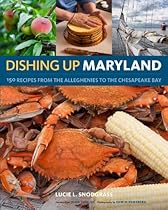
And for dinner, Pam had selected a really remarkable dish. This was definitely a two-person project, because it involves phyllo and neither of us is very deft with that material. While Pam made the layers of layers, I worked on the filling, as described in Dishing Up Maryland. The recipe is one of those whose title lists most of the main ingredients -- "Wild Mushroom Tartlettes with Goat Cheese and Bacon" -- though admittedly the recipe is worth reading for a few other key ingredients that make this a very scrumptious meal: various forms of fruit; marmalade; shallots; thyme; and red wine. A dollop of the soft goat cheese was placed at the bottom of a six-phyllo layered muffin tin, the bacon/mushroom/fruit mixture was placed on top of the cheese and then the tartlettes were baked at 400 in a convection oven for 20 minutes. Definitely not a dish to photograph-suffice it to say that it was quite brown. It was, however, delicious and textured with a wonderful combination of sweet, savory, creamy, and chewy.
Saturday, July 13, 2013
Really Red Fish
Not literally, of course: by the time the boats come into the harbor, the fish are already on board, and only the harbor seals are likely to snack on those swimming under our whaleboats. Still, a geography student who grew up on the edge of the harbor has introduced me to two seafood markets -- Kyler's and Fisherman's -- where the fish practically swim up to the counter.
![]() |
| Sockeye image: AllTackle.com |
Before I went seafaring this morning, Pam browsed Barton Seaver's Cod and Country -- the bible of sustainable seafood and the inspiration for our Peppery Pairing post back in March. On page 153, she found Warm Poached Salmon in Red Wine Sauce, clearly a good reason to look for salmon when I arrived at Kyler's after my row. For some reason, the wild, red sockeye was the same price as farm-raised pink salmon, so I went with the "fishier" option. On careful reading later, I saw that Seaver recommended pink salmon, but I think he would still have favored the wild over the farm-raised.
The recipe calls for heating the oven, only to 200 degrees, and then heating a thinly sliced shallot and a couple of sprigs of thyme in two cups of red wine. The wine should not be generic "cooking" wine in his view, since the cooking -- especially with the dramatic reduction used in this recipe -- would accentuate any flaws. We considered our home-vinted Pinot Noir, but decided to go all in, and I chose a Beaujolais. Specifically, I got two bottles of 2011 Beaujolais-Villages from Louis Jadot (est. 1869), made in Beaujolais -- bien sur! -- from Gamay grapes.
The two bottles were distributed as follows -- one half of the first bottle for poaching and one half for the chefs (Pam made a wonderful salad that had really been in the field at Colchester hours earlier); the second bottle was served (by and to us) to accompany dinner and a movie. Even in more usual circumstances where we just a more modest amount of wine in the cooking, I recommend cooking with something that can be served proudly with the meal.
Seaver is very specific about the heating and poaching -- the liquid in the pan should be maintained at 170 degrees (which I did) and the salmon should be cooked in 12 minutes (which it was not). I eventually realized that the problem was my lack of attention to one detail. Seaver specifies the use of a saucepan barely big enough to hold the salmon. I had one large piece, cut in two, but only occupying about 2/3 of our large, indispensable cast-iron skillet. I should have used a smaller pan, so that the fish would be entirely in the steaming wine.
Eventually, then, the fish was cooked through, and I transferred it to a warm platter in the oven. Then I turned up the heat on the remaining wine and shallots, until the two cups was reduced to two tablespoons. (I was reminded of a Northern Exposure episode in which Maurice did something similar with beef, at great expense.) Once the wine was reduced, I removed the thyme sprig, and melted two tablespoons of butter into the sauce. I then poured this over the fish and served it with some fresh bread and Pam's wonderful salad and a slightly-chilled second bottle of Beaujolais. Because the tasting notes from Louis Jadot mentioned strawberry as a major part of the flavor profile, I put a few strawbs into the salad, to good effect.
Saturday, February 16, 2013
Tamale Tradition
As we mentioned in the Texas entry on our Celebrating the States blog a couple of years ago, tamales were an integral part of the South Texas experience that we somehow missed when we lived there. We did enjoy much of the culinary bounty there, but somehow missed this New Year's tradition until we had moved far, far away.
Once we realized the error of our ways, we made tamales a New Year's Eve tradition with friends, so that it is now a vieja receta (old recipe) for our household. This year we had our feast about a month late, and also realized that we had not yet posted it on this blog, those we have posted several other items related to tamales. These include sensual tamale tortillas (last Valentine's dinner), a radio report on the Tuscon Tamale Company (which we have not visited yet), and Central American nacatamales. This week, however, the focus is on our version of the classic tamale
The recipe we use won a contest in Texas Co-op Power magazine a number of years ago. The recipe itself is not on the magazine web site, though a special tamale-based cornbread dressing is, and these tamales could be an ingredient in that ambitious dish.
INGREDIENTS
Not exactly an ingredient, but essential to this process is some kind of vessel in which the tamales can be suspended above boiling water for steam. We are fortunate to have a very serious pasta pot. The insert is designed to work as a colander, but works beautifully as a steamer.
The most critical ingredient is a few dozen corn husks, which might be the most difficult item to find. Identify a source before you invite people over. In Brockton, Price Rite is a reliable source; other markets sometimes have them as well. Soak them overnight in warm water, to start the tamales the next morning. Because they float, I put them in a big bowl with a small bowl on top.
For the filling
2-3 pounds chicken thighs (or 2 pounds ground pork or beef)
3 tablespoons cooking oil (I used Lebherz chipotle olive oil this time)
1/4 cup flour
2 beef bullion cubes (I have done this in the past, but since I used chicken and had no beef bullion on hand, I improvised with broth from boiling the thighs)
1/2 cup canned green chilies, chopped (this year I chopped one fresh Anaheim pepper; a poblano would also be good)
4 large cloves garlic, minced
1-1/2 teaspoons salt (I skip this, as I do salt in most recipes)
1/2 teaspoon dried oregano
2-3 tablespoons ground chili pepper (never quite sure what to do with this, I just use a bit of red pepper flakes
1 tablespoon chili powder (I use more)
1 tablespoon ground cumin
1/4 cup tomato sauce (I use a bit more)
1/4 teaspoon Cayenne pepper
For the masa dough
1.5 cups Crisco (Recipe calls for lard, which is authentic but not necessary. Do not melt the lard or Crisco, but if it is very cold, it will be difficult to mix.)
4-1/2 cups masa harina (corn meal)
1-1/2 teaspoons salt (I do use this, since it is dough and salt is often a critical ingredient)
2-2/3 cups warm water
To prepare filling, boil the chicken until very tender. I keep the skin on to help form the broth. Then drain and use two forks to shred, discarding the bones and skin. (For ground pork or beef, just proceed to the next step.)
Brown in oil in a large, indispensable cast-iron skillet and add minced garlic. Sprinkle flour over the meat and then add 2 cups water with bullion or 2 cups of broth. Heat mixture while stirring in remaining ingredients in listed order; cover and simmer for 45 minutes. Uncover and continue simmering if necessary to ensure it is not too soupy. During that time, prepare the masa.
Vegetarian option: Because our daughter is a vegetarian, I always modify the recipe above to make some soy-crumble tamales for her. In a separate, smaller skillet, I brown some Morningstar soy crumble while I'm browning the chicken. I then divide all of the other ingredients (except for the chicken broth -- I use veggie broth) proportionally, adding about 1/4 of each ingredient to the vegetarian pan. I then assemble them and position them in the top of the steamer. Of course, the whole recipe could be made vegetarian in this way.
To prepare masa, beat the Crisco (or lard) with salt until fluffy. Mix in the masa harina and warm water, beating until very thoroughly mixed. It will be a somewhat crumbly dough.
To assemble, (next year I'll take some photos and a video at this stage) move the dishes around to create a logical lineup, like you are Henry Ford. I start by moving the skillet to the counter, putting the steamer (with water in the bottom) on the stove top, and putting the bowl of masa nearby. Closest to the stove, I put a plate I have stacked the softened, drained corn husks.
Then, I spread out each husk and coat it with a thin (maybe 1/8-inch) layer of masa, using a spoon and or my thoroughly-washed hands. I then spoon a thin strip of filling down the center of the husk. I roll one side of the husk over this carefully, so that the masa mostly covers the filling, then I fold up the narrow end of the husk, then I keep rolling to make a little package that is closed at one end. Some of the filling may be visible, but it should mostly be inside the masa and definitely inside the husk.
I then arrange the assembled tamales in the steamer. The recipe says I should be able to make 6 dozen, but I am always closer to 25 or 30, about 5 layers of 5-6 each.
Once assembled, I heat the pot until the water in the bottom boils. I used my water-proof camera to document the steaming process, which should last at least 1-1/2 hours. Perhaps because my tamales are a bit thick, I recommend 2-1/2 hours.
I had not softened enough corn husks for all of the filling and masa I had prepared, so I made tamale pies with the remainder. I simply put all the "extra" filling in the bottom of loaf pans and covered with masa. I baked these at 350 for about an hour. They were splendid leftovers!
This year I started a new tradition, which was to prepare manioc, also known as in the Caribbean as yucca and elsewhere as cassava or mandioca or tapioca -- as one of the side dishes. (Black beans were another, and home-brewed ale was another). Manioc is a root vegetable similar to potatoes, but grown in lowland tropics. It is among the most common foods in the world, but not well known in the United States. In our area, it is increasingly available in some of the larger supermarkets, even in West Bridgewater!
To prepare this, I cut the root into 3-4 inch lengths, and cut a slit in the bark-like skin along one side. This allowed me to peel the root; I then then quartered each piece. We are very fortunate that our large pasta pot includes a small steaming basket in addition to the main basket, so I was able to cook these at the same time. The result is the bland, stringy food that is a staple worldwide; it benefits from hot sauce, and from its pairing with the spicier tamales.