How It All Started

Bob Phillips

The title of this blog was inspired by one of my Spanish professor's at Miami University of Ohio, Dr. Robert Phillips, who died in the e...

Showing posts sorted by relevance for query lebherz. Sort by date Show all posts

Thursday, July 26, 2012

Mole L.O.V.E.

During a recent visit to Frederick, Maryland, we found ourselves slurping vinegar straight from little sample cups -- a lot of them! What inspired such strange behavior? The delicious balsamics and infusions of L.O.V.E. -- The Lebherz Oil & Vinegar Emporium, that is.

We learned of the shop from our UMBC alumni magazine -- the shop was founded by the delightful Maggie Lebherz, a recent graduate of the Spanish program from which Pam graduated a few years back. Our visit was even more enjoyable and interesting than we expected. We learned that -- as with coffees and teas -- oils and vinegars can be special either because of special origins and preparation or because they are infused with other flavors.

Samples in the Emporium are free but fine oils and vinegars are expensive, so we had to choose carefully. Fortunately, Maggie mentioned a tantalizing recipe that employs the most decadent vinegar in the shop: 12-year-old dark chocolate basalmic. The recipe in question is Lebherz' own version of chicken with mole (MOH-lay) sauce.

As I mentioned in my Champandongo Magic post last November, I have been a sucker for mole poblano, after first having it in the summer of 1989 on the flanks of Popocatepetl, near its birthplace. "Poblano" refers to the Valley of Puebla, arguably the hearth of mole and of maize. I use "arguably" because the neighboring state of Oaxaca has competing claims on both, and according to a food-travel article in today's Boston Globe, it is home to at least seven kinds of mole!

A few restaurants in our area serve mole, but always as an enchilada sauce or over boneless chicken breast, rather than the bone-in turkey or chicken that Moctezuma intended. For me, that original mole was served over a turkey I had seen wandering around the kitchen only hours before, prepared by ladies who spoke only Nahuatl!

In gathering ingredients for the Lebherz version of mole, we were fortunate enough to have cooking chocolate from Castillo Cacao in Matagalpa, and we were even more fortunate that Pam remembered this fact.
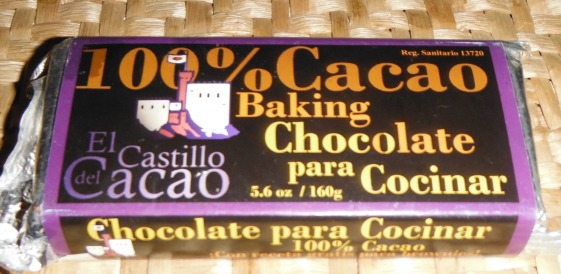
Moles vary, and mine varied even a bit more, with thees slight modifications to the recipe:
  1. Because almonds are mentioned in the directions but not listed in the ingredient list, I guestimated that 1/3 cup of slivered almonds would work. 
  2. The biggest gumption trap that led me to delay making my first mole sauce by two decades was the need to roast peppers. This should have made the listing of one ordinary green pepper welcome news, but instead I was determined to employ this new skill. I was therefore pleased to see passilla chiles in a local grocery, even though I had to go to a separate store for corn tortillas. I roasted them according to the method I mentioned in my Busy Kitchen post last month, along with a half of a jalapeño we had on hand.
  3. The recipe calls for olive oil, for which I substituted Chipotle Olive Oil, also from L.O.V.E.
  4. Finally, the recipe calls for light rum, which we do not usually keep around. I almost substituted aged, dark rum from Nicaragua for a bit more complexity, when I had an even more brilliant (in my mind) idea: Kahlua.
I did not take any photos of the final product -- I expected it to taste much better than it looked, and I was correct -- but I did make a little still life of some of the more colorful ingredients (including the oil and vinegar and a beautiful onion from Colchester) during preparation.


I increased everything in the recipe slightly by about half, both so we could be sure to have enough for guests and so that we could have leftovers. I think I added more broth than necessary; in any case the result was more like a stew than a sauce -- a happier spot along the mole continuum for Pam, but thinner than I would have preferred.


The result was not as photogenic as the tableau above, but it was certainly delicious, served with rice, warmed corn tortillas, and of course beer. It was even better on subsequent days. We finished the chicken but have some sauce left over (yes, leftovers of leftovers), which I hope to fashion into some sort of champandongo.


If I ever find a source to a proper assortment of fresh chiles, I will try the Puebla-style recipe on Epicurious, perhaps modifying it to include the Lebherz secret ingredient. The sad assortment of peppers in our local markets make this highly unlikely, unless I treat the ingredients list as a shopping list for next winter's seed catalogs.


Which I might just do.

Saturday, November 14, 2015

MOCHA MOLE (MO-ka MO-lay)

Today's post will be a bit odd. Many entries in this space follow a by-now familiar pattern -- a recipe is described or summarized, and then we describe any deviations from the recipe before describing (or bragging about) the results. 

For this entry on mole, I will follow the pattern; what is odd is that the recipe from which I deviate is one I created myself as I was preparing the meal. The deviations are small, however, and as is often the case simply have to do with what ingredients were readily available.

The recipe calls for several of the ingredients from Equal Exchange, for two reasons. First, it is an excellent company committed to just treatment of farmers worldwide. Second, it was having a recipe contest.

Equal Exchange is best known for its coffee, and in fact its coffee director Rodney North is in large part responsible for the way in which coffee has taken over my life. It is now also importing fairly-traded chocolate and more recently tea, as well as some domestic products such as cranberries and raisins.

Because two of its most important products are coffee and chocolate, I decided that I should create some sort of coffee variant on mole. And because the unconventional use of a balsamic from Lebherz Oil and Vinegar Emporium had helped me to win a recipe contest before, I decided a L.O.V.E. potion would be on the agenda again. The recipe calls for some of Lebherz vinegars and is also modified from a mole recipe that we first included on this blog as Mole L.O.V.E. in 2012.

For further good luck -- and just because we enjoy their company -- we reassembled the winning team from that 2012 Bob Marley Coffee recipe contest to share this meal with us.

Before going on I should clarify that mole is a Mexican sauce more properly known as mole poblano, after the state of Puebla where it originated, and where Pam and I spent the summer of 1989. It is pronounced "MO-lay" and has nothing to do with those mouse-like critters. This blog now has several mole variations. 

Here's the newest one. It cites EE and L.O.V.E. ingredients, though substitutions can be made.


INGREDIENTS
One red chili pepper or one small jar roasted red pepper
One cup dry, finely ground Equal Exchange coffee, preferably a Central American blend (NOT brewed)
¼ cup brown sugar
4 T chili powder, divided
1 T paprika
Zest of one orange, divided
1 t black pepper
1 t salt
Whole chicken in pieces or equivalent of chicken, bone-in preferred
4 cloves garlic, minced
2 T Chipotle-infused olive oil
One onion or two shallots
1 t cumin
1 t cinnamon
½ t nutmeg
4-6 cloves
½ cup Equal Exchange raisins
½ cup slivered almonds
1 T Lebherz espresso-flavored balsamic vinegar
1 T Lebherz chocolate-flavored balsamic vinegar
1 Equal Exchange dark-chocolate candy bar, either strictly dark chocolate or with nuts
2 ounces espresso-infused tequila or Kahlua, optional
2 T sesame seeds, for garnish
Corn tortillas
Equal Exchange English Breakfast Tea (because it is smoky), Sangre de Toro, other Spanish red wine, Negra Modelo beer

DIRECTIONS
If using a fresh chili pepper, place it directly over flame on a gas stove, and turn with tongs until well charred. Remove from flame and place in a small zip lock bag or plastic-covered bowl for 10 minutes. Then remove stem, outer skin and seeds, and cut into small pieces. If using jarred peppers, simple cut into pieces and set aside.
In a large bowl, combine dry coffee, sugar, 2 T chili powder 1 T orange zest, pepper, and salt
Roll each piece of chicken in the coffee mixture until coated.
Photo: Ashley Costa
Heat chipotle oil in skillet, cook garlic so that the oil absorbs its flavor
Heat brown chicken pieces in the oil, 3-4 minutes per side; work in rounds if necessary
Transfer chicken to baking dish
To the oil, garlic, and residual chicken fat, add onion or shallot and roasted peppers; cook until onions are translucent
Add spices, tomatoes, tomato sauce, raisins, and almonds. Simmer on medium-high, covered, for 30 minutes, stirring every ten minutes.
Continue simmering, uncovered, and preheat oven to 350 F
Pour in the vinegars and optional liqueur
Place entire candy bar in the center of the skillet. Feel free to take a photograph at this point!
After one minute, or when the candy bar has melted sufficiently, stir to blend vinegars and chocolate into the rest of the sauce.
Pour sauce mixture over chicken and bake at 350 F for 30-40 minutes or until done and tender.
Remove from oven, sprinkle with sesame seeds, and allow to cool for ten minutes.
While chicken is cooling, warm tortillas in a dry, cast-iron skillet on high heat for a few seconds each. Place in tortilla warmer or cover with a towel.

Serve with a favorite beverage. Use tortillas to enjoy all of the sauce!

DIGRESSIONS
Normally I would roast a red pepper on the stove top, as shown in my Busy Kitchen post. In our Whaling House, however, we have an electric stove, so I used red peppers from a jar.
The coffee rub shown is not quite the one described. It was a rub we had on hand, and we did not have Equal Exchange coffee on hand (even though we live near the headquarters, we can only get the coffee online. So rather than use another brand of coffee, I used the rub. The description above approximates the ingredients on the rub.
We faced a similar predicament with the chocolate. EE was once sold in our local grocery store, and I discovered too late that it no longer is. So I got another brand (the name escapes me) of organic chocolate. It includes some pasilla pepper and cinnamon. Assuming such chocolates are hard to find, I recommend cayenne and cinnamon be added to the sauce.

RESULTS
We did -- thanks to friend and photographer Ashley -- have both of the recommended wine with this. The Toro is definitely the best pairing.
The overall outcome was a sauce that was a bit chunky for mole, but highly delicious. 
Verrdict: Eight Thumbs Up!

Sunday, April 30, 2023

Sweet & Sour Scallops

Frequent readers of this space may recall that we were introduced to the world of infused olive oils and vinegars in essentially the same way we were introduced to each other. That is, our UMBC alumni magazine introduced us to Lebherz Oil & Vinegar Emporium in Frederick, Maryland shortly after it was opened by a fellow graduate, and shortly after we launched this blog. A quick keyword search reveals that we frequently turn to L.O.V.E. for inspiration.

While we still visit that original shop whenever we are in the area, we were pleased to see a similar purveyor open much closer to home Ripe from the Vine in Marion, Massachusetts. When visiting this weekend, Pam bought two large bottles of chipotle olive oil, leading the proprietor to ask if we had tried this in combination with pineapple -- on scallops!

An unexpected combination that we will
be trying in other dishes.

We were on the way to Kyler's Catch at the time, with the intention of making Vincent Price's scallops Sauté Meunière to share with Pam's visiting sister. During the car ride, we figured out that I could cook the dish in exactly the same manner, but using chipotle-infused oil and butter for the sauté stage and the pineapple-infused vinegar with white wine in the deglazing stage (instead of lemon juice). We picked up that white wine on the way to the fish monger -- Löss & Lehm Grüner Veltliner from our friends at Stevie's in Fairhaven.

The result: scrumptious, even decadent, and pairing well with the wine I used in the deglazing.


I confess to taking a big shortcut on sides, in part because I am trying to baby an injured left knee. So those are just what they look like: canned cranberries from our local growers cooperative (aka Ocean Spray) and slightly enhanced Annie's mac & cheese. 

Lagniappe

Lebherz introduced us to the idea of flavored vinegars as a topping for ice cream. I fully intend to try this one on a coconut dessert this summer!

Sunday, March 1, 2015

Blueberry-Vanilla Goat Cheese Quesadillas


We have been rather remiss in 2015 with following through with the weekly recipes. I don't feel bad about it. The New Year started with a death in the family, and one snow storm after another, so getting out  cookbooks and finding something to blog about has fallen to a low priority after mourning, traveling, and cleaning up snow.


The dish I made for breakfast this morning didn't come from a recipe book. I was simply inspired to make it when I happened to notice the two main ingredients next to each other in the refrigerator. We bought the blueberry vanilla cheese from Trader Joe's last week. It is something we usually pick up there and I enjoy it on English muffins or crackers, but yesterday I realized it would make a jim-dandy breakfast quesadilla. The cheese is crumbly and hard to spread, so getting it onto a tortilla shell was more a matter or pressing down on the crumbles with the flat part of a knife rather than spreading. I covered one half of a round tortilla shell with the cheese, folded and then grilled it on the stove-top for a few minutes in each side. As a side dish I sauteed some banana slices.


We topped the quesadillas with some flavored vinegars from Lebherz Oil and Vinegar Emporium. I took a selection of likely pairings from the cabinet and tried them all. I found the Dark Chocolate to be especially tasty. The Wild Blueberry, and Ripe Peach were also good. James tried Wild Blueberry and called it "delicious". 

These were super easy, and super yummy.

Wednesday, February 3, 2021

Like a party on your plate!

Groundhog's day (or Woodchuck Day, or Marmot Day, or Whistle Pig Day) is also Candlemas. We celebrated with a recipe from The Wicca Cookbook. I selected Blood Orange Mahi Mahi (for which I actually used tuna steaks from Kyler's Catch). The most difficult part of this was making the salsa, which really wasn't hard at all, it just took a lot of ingredients and a lot of chopping and dicing-more time consuming than difficult.

The salsa consisted of: 

1 sectioned blood orange

one half of a decent-sized chopped red onion

1 cubed avocado (James found a perfectly ripe one at the grocery - dark green skin, and lovely "Grinch green" inside)

1 t. dried cilantro

1 minced jalapeño pepper

juice of one lime

The tuna steaks were cooked in a skillet on medium heat for about 5-6 minutes per side. The recipe said to sauté in olive oil. Lucky for me I had a big bottle of Blood Orange Fused Olive Oil from Lebherz Oil and Vinegar Emporium. The recipe also called for salt and pepper for seasoning. I used coconut-infused black sea salt and lemon pepper, which really was the right thing to do. In addition to the salsa, the steaks were sprinkled with some crumbled feta cheese.

A beautiful presentation with an explosion of colors. The bite of the red onion and jalapeño complemented the sweetness of the orange and the creamy avocado and salty feta perfectly. This may become an annual tradition.   


Saturday, December 30, 2017

Scallops and Broccoli

Our adult kid Harvey has become quite good at finding gifts for us that connect to our interests, such as rare nautical prints that are at once unfamiliar and immediately fitting for our home. They came through again this Christmas, with the Bruce Beck's 1989 Official Fulton Fish Market Cookbook.
This is our kind of cookbook -- rich in cultural context, in this case relating to the New York institution whose name appears on this cookbook and no other. The book also has sea-creature illustrations that relate to Harvey's own interest in animal-related illustration art.

With the famous scallops of New Bedford just a few blocks away, we decided -- as readers of this space know we often do -- to look for a new way to prepare these buttery mollusks. We have tried many variations on creme sauces, so I decided to try something a bit different. I found one of those recipes for which assembling the ingredient list gets the cook most of the way through the cooking process.
Click to enlarge
Since I was determined to serve this with Malbec and we did not have any white cooking wine open, I decided to substitute ginger brandy for the wine (this was whisked together with the salt and sugar in a small bowl). For the chili oil, of course, I used chipotle-infused olive oil from our friends at Lebherz. 

I do not exactly avoid broccoli recipes, but I tend to find something else when broccoli presents itself. Since the rest of the family was ready to embrace this healthy option, however, I did, too. I blanched the broccoli as instructed, meaning I put it in boiling water for just under a minute and then drained it and plunged it into cold water. I then left it in a colander until the rest was ready. The broccoli emerged crisp but not too crunchy -- just right for me!

I then heated plenty of salted water, to which I added the linguini once I had everything else prepared. I had never trimmed scallops in the way described here, but I will from now on. I then sauteed the scallops in oil for just a minute, then the broccoli for another couple before adding wine mixture. I then drained the linguine and tossed it with the scallop mixture; we did not add soy sauce at the table as suggested, and we did not miss it.

This was delicious, and on the light side since it had no cheese or butter. It was scrumptious as leftovers.

Saturday, February 15, 2014

The Secret Ingredient is L.O.V.E.

We planned our Valentine's dinner for over a week, with one overriding goal: no crowded restaurants for us. With a little work and forethought, we knew we could have a superior dinner with no reservations. Each year at this time, we recall an evening spent wandering from restaurant to restaurant, skipping a 20-minute wait only to find a 40-minute wait, eventually settling for a dinner that was made enjoyable mostly by our readiness to eat anything.

Once we established the Valentine's-Day-at-Home tradition, actually, we have endeavored to make it both a romantic and delicious experience, and this year we seem to have done quite well. We each prepared an entree, waited a bit, and then each of us created part of dessert.

James: A week before the event, I accidentally recycled the newspaper in which I had seen a very intriguing recipe for steak tips with mole (moh-LAY) sauce. Librarian Pam said, "Have no fear!" (or words to that effect), since newspaper recipes are all syndicated and will show up easily on some other paper's site. About 2.5 seconds later, I was looking at Beef Mole with Buttery Baguette, courtesy of The Oregonian.

Fans of this blog will know that we have an affinity for mole, more properly known as mole poblano, after the Mexican state of Puebla, where we spent the summer of 1989. Although I love making "real" mole, it was nice to find this "express" version of the recipe, a gringo simplification that required no pepper roasting and a simplified ingredient list. I followed the recipe as written, using our new immersion blender for the sauce itself. Just as I was bringing it to boil, I realized that two vinegars from our friends and fellow Retrievers at Lebherz Oil and Vinegar Emporium (hence the L.O.V.E.) would make it even better. I added the dark chocolate and espresso balsamics, and as with our first mole encounter in July 2012, it turned out loverly, indeed! (Careful readers will recall that the chocolate balsamic also figured in the success of our award-winning mocha cake later that year.)

Pam: I knew that I'd find an appropriate Valentine's Day recipe in Intercourses: An Aphrodisiac Cookbook, but Wow! How could we have imagined how great the strawberry pasta would turn out! This super simple recipe had only a few ingredients. To the 1/4 pound cooked spaghetti I added some shredded Parmesan cheese and then about a dozen pureed strawberries and some melted butter heated with 1/4 c. heavy cream. This was all tossed together in one bowl and then garnished with fresh chopped mint leaves. It was sweet, incredibly creamy, and a perfect complement to the chocolate in the mole sauce. It truly had a sensuous flavor and texture. Everything was served with sparkling Brut Curvee "RJR" from Westport Rivers Winery.

Pam: After allowing our fabulous dinner to settle a bit we made our dessert and coffee. A Facebook friend posted this recipe for "Cake Batter Ice Cream" (essentially an ambitious banana ice cream). We already had frozen banana slices in the freezer as anytime I have a banana go past ripe I slice it up and freeze it to use for smoothies. These had been frozen for several months and gave our blender quite the workout. It actually began to smoke. I modified the recipe a bit to use ingredients we had on hand, although James did go out and get romantic red sugar sprinkles to put on top! Smooth, creamy and sweet!

Proportions are 4 ripe, frozen bananas; a t. each of vanilla, and almond extracts, 1/4 t. baking soda; 1 T. agave nectar; 1 T Butter Pecan syrup; sprinkles to taste.
James: The two-shelf collection of cookbooks that got this blog started includes several that are specifically about the romance of preparing and sharing food. One of these is called quite simply Coffee Love (which is incidentally also the title of the PG-13 section of my Geography of Coffee web site). Leafing through the book, my eye settled quickly on Café de Olla on page 52. I started one cup of coarsely hand-ground Sol y Luna coffee from my good friends in the Corrales family. It is not dark-roasted, but it was grown and prepared with love, and just happens to be some of the best coffee on the planet. I added 1/2 teaspoon of anise seed and a two-inch piece of cinnamon stick to one quart of cool, filtered water in a saucepan. I had hoped to add four ounces of piloncillo (Mexican brown sugar), but had to substitute a half cup of regular brown sugar and a tablespoon of molasses. I brought all of this gently to a boil, while briskly stirring with our molinillo. After letting it simmer for 15 minutes, I filtered it. The recipe does not specify how to filter it, but no better method could be found than our trusty Chemex.


The result was surprisingly delicious -- I usually do not like to have anything at all in my coffee except for coffee, but this was an exception worth making. It was quite good while hot, though the flavor did not withstand cooling very well at all. Next time, though, I hope to use real piloncillo, and a real olla instead of our steel saucepan!

Monday, September 16, 2013

Local Tostadas

They were not nearly from scratch, but this evening's tostadas were immensely satisfying, and I do think that the extra care taken is partly responsible, along with many local or regional ingredients. Previous tostada efforts have begun with store-bought corn tostadas, which are usually available in little bags of about a dozen, stacked in a rather fragile pile in the "international" section of the larger grocery stores. These are not bad, but they are not a great beginning.

Here is what I did this evening, drawing very loosely on the introduction to the tostada section of The Bible, also known as The Well-Filled Tortilla. Yes, it has an entire tostada section, which is yet another reason that you should go get a copy if you have been putting this off.

I started by boiling a couple of chicken breasts that were in the freezer. While they boiled -- which did take a while -- I chopped a small onion, a couple cloves of garlic, an Italian pepper, and one red-hot serrano pepper, all from this week's farm-box share at Colchester Neighborhood Farm. Once the chicken was very tender, I lifted the pieces into a medium bowl, where I used two forks to shred them. I then heated the last remnants of a bottle of Persian lime-infused olive oil from Lebherz (time to re-order!) in an indispensable cast-iron saucepan. I then browned the chicken in the oil, and added the aromatics, cooking until all of this just looked and smelled wonderful.

Meanwhile, I heated some refried beans (Trader Joe's Salsa Style) in a small, indispensable cast-iron skillet. Then I stirred a bit more EVOO and some chili powder into the chicken mixture. I turned both pans to very low heat and heated a goodly amount of EVOO (about a 1/4-inch deep; we never do this) in our large, indispensable cast-iron skillet. I then placed a store-bought, eight-inch, flour tortilla in the pan and heated it until the edges began to brown. I turned it over with tongs (our friend Rob insists this is the most important tool in the kitchen, and today he was right), cooked for another minute or so, and then placed it on a plate. I repeated with a second tortilla, being careful not to allow the oil to smoke, and to allow the tostadas (the first I've ever made!) to drain just a bit. When they got a bit puffy, the tongs proved useful in bringing them down to size.

With everything done at the same time (one of the toughest parts of cooking, in my book), we assembled by spreading the beans on each tostada and topping with a generous helping of the chicken. We then topped it with sliced, luscious tomato (also from Colchester), plain Stonyfield yogurt (healthier than sour cream), and a chipotle salsa from Green Mountain Gringo.

What could be better than all this, besides delightful company? The perfect pairing with Original Recipe Pale Ale from our friends in Westport.

UPDATE: The panic about Persian lime-infused olive oil was premature. Pam remembers an additional bottle, purchased for our Lime Jubilee in May. I know readers were worried!

Monday, July 29, 2013

Hymn Number 313

Those who follow Nueva Receta -- especially if they read the first post -- know that getting us to dig deeper into the unused pages on our cookbook shelves is the main purpose of this project. Our posts have indeed included an average of one new recipe per week, probably divided evenly between those shelves and online sources. It is still the case, however, that we have also shared a few of our standards. The arrival of tender asparagus in the store this week brought us back to two of those.

When I came home with asparagus this weekend, my idea was to use about half of it on a simple recipe from Mini Moosewood (as we call the indispensable Moosewood Cooks at Home) that sounds rather odd but really is quite nice. I trimmed the thick ends from about half a pound (they were so tender that I did not have to trim much) and steamed them for a few minutes. Meanwhile, I fried four local, fresh eggs over-easy in one of our indispensable cast-iron skillets, with plenty of black pepper. I then divided the asparagus between two plates, carefully topped with the eggs, and sprinkled freshly-grated parmesan cheese on top. This is quick, light, balanced and delicious.
Years later: We make this frequently. Quickly shopping during the
COVID-19 pandemic, James grabbed some asparagus, and the next
day Pam made this, reheating some biscuits. This time, Pam trimmed
the woody part of the asparagus and boiled rather than steamed it.
We used Spanish Manchego instead of Italian Parmesan
(after La Mancha, rather than Parma) and paired it with Simi Valley Chardonnay.
We agreed that it turned out exceptionally well -- and it looked good, too!
This left open the obvious question of what to do with the rest of the asparagus, and Pam suggested an old stand-by that combines asparagus, penne or ziti (does anyone know the difference) and chicken. Since we happened to have one chicken breast also left over from weekend cooking -- and the ancillary ingredients of fresh thyme and a couple of scallions -- this was the obvious choice.

As with any couple who cooks, we each have recipes we consider our own. "Would you like to have ______?" is synonymous with "I will cook" or "Could you cook?" -- depending on what is in the blank. In this case, though, Macaroni with Chicken and Asparagus from 365 Ways to Cook Pasta (see all of our entries that reference this book) did not have that effect. For a while it was such a standard with us that we each thought of this dish as our own. 

I did volunteer to prepare it, while Pam took the lead in readying our outdoor dining space -- it was a beautiful evening for enjoying our yard -- with plenty of citronella going, that is. 

It has taken me longer to write this preamble than it did to cook the dish. If you are still reading, here are the simple instructions, modified slightly from the book.

1. Start boiling water in a large pot, with a little olive oil.
2. Heat 2 T oil in skillet -- I used Lebherz lemon-infused oil, but ordinary oil will do. Cut asparagus into two-inch pieces, slice scallions thinly, and stir-fry at medium-high heat for two minutes.
3. Put about one pound of penne or ziti into the water.
4. Add one chicken breast, cut into bite-sized pieces. Cook until browned, adding a little salt, a lot of black pepper, and plenty of fresh or dry thyme as it cooks.
5. Meanwhile, grate enough parmesan to make you happy. I included some Cabot's very sharp cheddar as well.

When the pasta is done, drain it and toss with just a dab more oil and the cheese. Separate some for any vegetarian diners (as I did for our wonderful daughter) and then add the chicken mixture.

Serve with fresh bread and very cold Chardonnay.

PS: Why the reference to hymns? The 365 Pasta book does include 365 recipes, most of them quite distinct, some of them crossing over pages, others grouped on pages. They are numbered just like the hymns of a hymnal. For the two decades we have had the book, however, the index has been a mild annoyance, as it references the otherwise pointless page numbers, instead of the recipe -- or "hymn" -- numbers used in the rest of the book.

Wednesday, September 11, 2013

Fresh Al-Fresco

This evening's version of surf-and-turf involved a vegetable stifado created almost entirely from our Colchester Neighborhood farm-box share and seafood that is as local as possible here in Bridgewater.

First, the seafood: James spent much of the day as a spectator at a regatta on Clark's Cove in New Bedford. The Azorean Maritime Society had brought together -- for the first time ever, as far as anyone knows -- Azorean and Yankee replica whaleboats for rowing and sailing races (these boats do both). Only rowing nerds know the differences, but this was a great day to be a rower, if only from the sidelines, and cheer on folks representing Whaling City Rowing and the New Bedford Whaling Museum, as well as meeting Azoreans from both sides of the Atlantic and media from as far away as South Korea.

Although no seafood was caught in all of this nautical activity, it seemed an ideal day to pick up some local fare, so a stop at Kyler's Fresh Catch was essential on the way home. James got just one large filet of cod (for which we have some local real estate named, as well as a ceremonial carving in the State House). Once Pam prepared the stifado (see below), we were hoping to get the fish plated as quickly as possible, so James did his simplest preparation yet (regular readers will know that seafood has been a sort of final culinary frontier, so it has taken some time to get to this point). He simply heated the stove-top griddle, added perhaps two tablespoons of Lebherz lime-infused olive oil, and heated until the edges were opaque. Meanwhile, the upside was brushed with a bit more oil and Old Bay seasoning (more a Maryland thing than a local tradition) was liberally applied. The fish was then turned and cooked until fully opaque, but not a bit more!

The fish was prepared in addition to an old favorite from the Moosewood Restaurant Cooks at Home Cookbook, Vegetable Stifado, a vegetarian stew/soup which Pam took the lead in preparing. The recipe calls for several vegetables that are in season at this time of year in New England including eggplant, squash (yellow or zucchini), peppers, tomatoes and onions. also included some greens - everything came from our CSA farm box, although the dish was topped with some store bought feta.

Sacred Cod


Tuesday, May 28, 2013

Lime Jubilee

Prelude
(written by James, May 25)

For Pam's Jubilee Birthday (that number is biblical -- look it up) she wanted a lime variation on the coffee-infused cake she made for James' Jubilee Birthday (biblical types differ on how to count the Jubilee years -- this May we covered them both).

As we sometimes do, we got a bit carried away with a theme, so that the menu now reads:

Beer-Lime Grilled Chicken 
Lime Biscuits 
Cilantro-Lime Slaw 
LimeAde
Lime Sherbet, natch, as our only store-bought offering
A Lime Variation on our Award-Winning Mocha Cake

Margaritas may also be involved, and perhaps Corona, which is only palatable with a wedge of lime.

Lime Cake
(written by James, May 26)

Of course it is appropriate to begin the preparations for Pam's Big Day on her Attainment Day, when she has already attained her newly-earned aged. After preparing some famous queso dip for an unrelated event this afternoon, we prepared two items that are best completed a day ahead, both to clear the kitchen for other activities and because neither of these has any last-minute steps.

The first of these is Pam's kidney bean salad -- a gift to herself each birthday. No limes are involved. Then James began the lime cake, varying the Molly Katzen pound cake that has become our standard. I followed the recipe in the original Moosewood Cook Book, using Katzen's suggested variations for a lemon cake as a starting point to create a raspberry-lime cake.

Rather than using butter and flour on the Bundt pan, I prepared it with lime-infused olive oil (brought in from Lebherz just for the occasion) and flour. I replaced the vanilla extract in the original recipe with raspberry extract, adding the freshly-squeezed juice of three limes and the zest of two. After the batter was prepared, I gently mixed in a small package of fresh raspberries.

I usually do not sample batter, but if it is any guide, this is going to be a really nice cake!

Slaw
(written by James, May 27)

I started the slaw -- perhaps only the second I have ever made -- fairly early this morning so that it could chill and the flavors could meld. I must confess to cheating, using one of those ubiquitous bags-o-veggies that have taken over produce shelves recently. Perhaps a bit later, when our CSA presents us with actual cabbage, I will do this again with fresh ingredients. But on a busy cooking day early in the season, I was happy to have the shortcut.

Since the bag had about 6 cups of cabbage rather than 4, I increased the ingredients in rough proportion -- lighter on the mayo and heavier on everything else. I could not imagine what I would have done with a partial bag of shredded cabbage, so I used it all. I also made a few minor substitutions, as described below.

I used one cup of Light Hellman's, the only mayo that crosses our threshold. It has 60 percent of the calories of regular. We tried Lowfat Hellman's once, which is 50 percent, and learned our limits! We had scallions on hand, so I used these for a very mild onion taste, rather than buying red onion. I used a serrano-honey balsamic in place of the rice vinegar, and probably used more than was called for. I have no idea what "sweet chili sauce" is, so I used deli-style crushed red peppers. I whisked all of this together before stirring in the vegetation (using our silicon scraper-spoon to good effect).

The result was a nearly perfect slaw -- not too creamy or too vinegarish, and just tangy enough for a nice late spring meal outdoors.

Chicken
(written by James, May 27)

Speaking of which, after a few days of unseasonably cold, windy, and wet weather, the skies lifted, the sun came out, and the angels sang off in the distance, for the occasion of Pam's birthday. This meant that recent landscaping preparations were worthwhile, and that grilling outside was part of the festivities, rather than a frozen exile. I prepared the marinade just as directed in the aptly-named Beer Lime Grilled Chicken recipe,  except that I used some flat pale ale from the back of the fridge rather than the light-colored beer it calls for. (Those who are not hop-heads might be surprised to learn that "pale ale" is actually much darker than most mainstream beers.) The extra flavor certainly did not harm the outcome -- the pre-packaged, boneless, skinless organic chicken breasts turned out moister and more delicious than would have been thought likely.

(Incidentally, neither margaritas nor Corona were involved after all -- each diner enjoying some combination of limeade, ginger-ale, and home-brew.

Limeade and Biscuits
(written by Pam, May 28)

I adapted a favorite recipe for ginger-lemonade I clipped out of a newspaper years ago to make mint-limeade. I started with making a mint-infused syrup with chopped fresh mint from the garden, 1/4 c. of water, and 1/2 c. of sugar. All of this was heated until boiling, then removed from the stove top to steep. While the syrup cooled I juiced 9 limes. The lime juice, 4 cups of water, 1/4 of sugar and the mint syrup all went into a pitcher and were stirred until well mixed. Our friends brought over some lemon-lime seltzer water which when mixed with the limeade made a refreshing spritzer.

The lime biscuits were pretty simple -- much like other biscuit recipes I used, but with added lime zest and a bit of lime juice. I did think that the 10 tablespoons of butter the recipe called for seemed like overkill and used about 7 instead. They were plenty buttery, and quite tasty with just a hint of lime.

To round out the meal we also had some macaroni and cheese, and Tostitos Hint-of-Lime chips which were delicious with the leftover dip. Everyone was well satisfied when the meal was done.

Tuesday, June 25, 2013

Patos Supremos

During our time in the Rio Grande Valley of Texas James and I both worked in offices that had "Pato runs" on Fridays. Pato is the Spanish word for duck, and also the name of some fantastically delicious stuffed tortillas from the small restaurant chain of the same name. The tortillas were hand-made and were available in both flour and corn varieties. The flour tortillas were loaded with fat (from lard) which made them especially tasty. I always ordered mine with potato, egg, and cheese. I have never quite succeeded in replicating the special taste of a genuine pato, but over the weekend I came closer than ever.

I diced half an onion I had left over in the refrigerator and sauteed it along with one cubed and par-boiled potato in Chipotle olive oil from Lebherz Oil and Vinegar Emporium. Once the potatoes and onions were well cooked I shredded some cheese on top of the mix and turned down the heat. Then I scrambled two eggs in the same flavored olive oil. I stuffed the mix into 2 flour tortilla shells from Trader Joe's and topped them with some Pico de Gallo salsa. Delicioso!

Sunday, July 14, 2013

Scallop Fettuccine

Until a couple of years ago, scallops were something I only ate if I encountered them by chance -- usually a small scallop wrapped in bacon as a passed hors d'œuvre, or part of a medley seafood chowder. Then a student whose father catches scallops from Gloucester for a living brought me some fresh from the boat, along with a couple of recipes. It was then that I learned that if the decadence had already reached the level of scallops wrapped in bacon, then genuine maple syrup might as well also be involved.

Anyway, the succulence of those scallops set rather a high bar, so I have done very little with scallops since that first bout. Yesterday, though, I bought some along with the sockeye salmon, from the same seaside source.

For a going-away dinner this evening (Pam is off to Saskatoon for a week), I decided to make a nice Fettuccine Alfredo with these. I know I have done so a couple of times before, but I went online to look for some advice on just how to do it. I was very pleased to find My Food Adventure Book, a blog quite similar to our Nueva Receta -- foodie, but low-key.

Ours looked pretty much like this.
Photo: My Food Adventure Book
I enjoyed blogger Laura's Jumbo Scallops recipe, and will be modifying it just a bit this evening, to use a slightly different assortment of ingredients we have on hand. As we did last night, of course, we also had a Colchester salad.

I won't re-create Laura's instructions here; but will just mention the modifications I made. My usual approach to Alfredo is found in 365 Ways to Cook Pasta, which asserts that the use of cream is not authentic, and that butter and Parmesan are plenty. I accept the concept, but usually compromise with a little bit of cream. This evening I followed the Food Adventure approach -- itself a compromise with heavier versions, but instead of heavy cream, I used half-and-half.

We had no lemons and have depleted our second bag of limes, so I used commercial juice in the sauce, and I used Lebherz lemon-infused olive oil to sear the scallops. The last, most decadent adjustment: freshness is the name of the scallops game, so we divided a full pound!

We had the last of the 2011 Cinco Cães (Five Dogs) from Westport Rivers -- a bit fruity to be a perfect pairing, but quite a welcome accompaniment.

The family verdict: Delicious! -- though Paloma would have cut back on the lemon.


Tuesday, August 7, 2012

More about beets (and shrimp, too!)

Last week's farm box pick-up featured more beets. As James tells us in his We Got the Beet post, finding recipes for beets that are pleasing to our pallets can be a difficult test for us. Rising to the challenge, however, I found a recipe for Roasted Beets with Feta on Allrecipes.com. It turned out to be a perfect recipe for us in several ways - first we had all the ingredients (once we substituted a farm-box onion for the shallot, and improvised with the variety of herbs we got from the box as well) second, it was quite tasty! Roasting the beets gave them a nice caramelized sweetness. And they were such a beautiful shade of deep red. We ate this as a side dish to our main course, Shrimp Cake Bites which was posted by Old Bay Seasoning on Facebook. I used way more than the 1 t. of Old Bay called for though. I just added until I thought it seemed like enough. The cilantro came right from my garden. I also had no idea what almond flour was, but it seemed to work fine to just put slivered almonds into the blender with the rest of the ingredients. I also used chipotle olive oil (from Lebherz Oil and Vinegar Emporium) to fry, rather than coconut oil. The cakes turned out very spicy, which is just the way James and I like our sea food. Regular readers of this blog know that I do not have a food processor, and instead use a blender whenever a food processor is called for. I will admit that this combination of food did present a challenge for our blender, but undaunted, I kept mixing the concoction in short bursts and stirring until everything was mixed to the right consistency for making the cakes.

Friday, September 28, 2012

Stirring Up Mocha Cake


This week's recetas nuevas are variations on two favorite recipes of long standing, made all the better with secret ingredients from our friends at L.O.V.E. -- the Lebherz Oil & Vinegar Emporium in Frederick, Maryland. As regular readers may know, this culinary treasure was recently established by a fellow alumna of UMBC, where Pam and I met a few years back. And don't worry: the "secret" ingredients are about to be revealed!

The first modification was a simple one. We were pleased to get some late-season eggplant, so of course made a bonus round of ratatouille (we thought we had put the season finale in the freezer a couple weeks ago). By adding a small hot pepper from our farm box and chipotle-infused olive oil from L.O.V.E. and cooking for four hours, this weapons-grade tomato stew was even more scrumptious than usual.


The genius part of the evening was the addition of dark chocolate balsamic vinegar -- along with a few other modifications -- to our favorite pound cake recipe. Our new creation is based on the Mocha-Swirl Pound Cake on page 191 of Mollie Katzen's classic Moosewood Cookbook (just try to find another two-word title with eight Os!). The result is a perfect use of Marley Coffee from Jamaica!

Our modified version requires
  • Butter (or Crisco or Pam) and flour for a Bundt pan
  • 1 pound (hence the name) of butter, softened. Yes, that is four sticks. I'm going rowing in the morning.
  • 2 cups unbleached, granulated sugar, preferably fair-trade organic, which is available from Costco, believe it or not!
  • 6 eggs, preferably from a local chicken. Ours were from Hanson Farm.
  • 4 cups white flour (use the healthy stuff on another recipe)
  • 1 Tbs. baking powder
  • 1/2 tsp. salt
  • 1 cup Buffalo Soldier Marley Coffee, strongly brewed. I used medium-roasted La Orchidea from my friend's farm in Nicaragua, because I did not have time to order the Marley Coffee, but I think the medium-dark Buffalo Soldier would be even better for this recipe! (Reserve the rest of the pot of coffee -- I used a Chemex -- to serve with the cake.)
  • 2 tsp. pure vanilla (also available from Costco, by the way)
  • 1/2 of a 3.5-ounce Ibarra Mexican chocolate disk, which lends just a hint of cinnamon  The next time I plan to use exotic pepper from Madécasse, which I happened to try the day after making this, and I think it would be even better. Melt the chocolate in microwave or on stove top.
  • 1 cup confectioner's sugar
  • 2-3 Tbs. dark chocolate balsamic vinegar (see above)
To prepare, first make the batter:
  • Beat together butter and sugar until fluffy. Beat eggs into mixture, two at a time.
  • Sift together flour, baking powder, and salt.
  • Alternate mixing dry ingredients and coffee into the butter mixture, until blended. Do not beat or over-mix.
Then prepare to swirl:
  • Separate one-third of the batter to a small bowl, blend in melted chocolate.
  • Prepare Bundt pan with butter and flour and pour in plain batter.
  • Dollop chocolate batter in clumps onto pan, and then use a knife to swirl gently into the plain batter. 
Bake and glaze:
  • Bake at 350 for 50-60 minutes, or less if using convection. Remove to wire rack to cool, and overturn gently onto a plate, using a spatula if necessary.
  • Meanwhile, sift confectioners sugar and whisk in 2 Tbs. chocolate vinegar. It will be difficult at first, but avoid the temptation to add too much liquid. Eventually, a thick glaze will form, which will drip off the whisk. Use this to drizzle glaze onto upright cake.
Present:
  • Use bread or cake knife to slice modest servings -- this is rich cake!
  • Garnish with espresso beans and/or mocha chips (ours were from Hilliard's)

Serve with Marley Coffee and try to contain yelps of true bliss, as the tart glaze melts perfectly into the rich mocha cake!

UPDATE: Having a professional photographer involved in the baking means a lot of cool shots of Stirring Up Mocha Cake in progress. Enjoy!

FURTHER UPDATE: We actually won this contest!


We were modifying a fairly complicated recipe, so all members
of the team had to study the original version!
Yes, a pound cake does have a full pound of butter.
But not in each slice!
It's all about Jamaica.
Jamaica, coffee, and chocolate, that is!
The chef hat does not help the coffee,
but hand grinding does!
While going to the trouble of baking
from scratch and using good Marley Coffee,
one might as well use a Chemex or
other pour-over brewing method.
Two hats are better than one for adding the coffee!
Coffee-infused batter!

And the cocoa batter

Swirl the two batters -- with and without cocoa.


Dark Chocolate Basalmic Vinegar glaze is the secrete ingredient.
The final presentation -- with espresso and mocha chips!

Sunday, May 19, 2013

Dippy Signature

Readers of this space know that we love to cook all kinds of things, some of which are quite fancy. It is a bit funny, then, that my signature dish is just a dip. I had not made it for quite a while, but brought some to a party recently, to rave reviews. When looking up the recipe -- James' Killer Queso Dip -- on my web site, I was reminded that this dip actually brought me temporary fame in the online recipe world, as it made me the Featured Chef on FastRecipes.com for a week or so several years ago. I had not heard of the site, but its managers found my dip and liked it!

Pam and I cannot remember where we originally found the recipe, but we know I have been making it since our Texas days in the mid 90s, if not before. The original recipe called for one cup of salsa, leading me to make the double recipe my standard dose, since salsa usually comes in a 16-ounce jar. The real key to the dip's success, though, is that I do not use ordinary salsa -- I always get something a bit more complex and smoky, usually a chipotle salsa, and usually as local as I can find.

This weekend I have made the dip twice, with a new variation. Rather than using roasted red pepper from a jar, I roasted my own. After years of being intimidated by this process, I tried it about a year ago (as I describe in detail in Busy Kitchen). It is actually easy and quite rewarding. For the dip, I used a very large, mild red pepper that was being sold as a red bell pepper but was deep red and shaped more like an oversized poblano. I charred, sweated, peeled, seeded and chopped it, stirring it gently into the dip. (I use a silicon scraper rather than a spoon, with low heat to get this dip smooth.)

The roasted pepper is not only better flavor, but it avoids the use of a glass jar, so this is a "greener" red pepper. Realizing that the dip might benefit from the residual oil in which peppers are packed, I added a tablespoon or two of my own. We are way beyond ordinary olive oils at Casa Hayes-Boh, though, so I used some oil infused with Persian lime. I think this moved the dip to a whole new level!

All this use of lime-infused oil created a potential crisis. Next week, the comestibles for Pam's birthday will be lime-themed, so I called our friends at Lebherz to ship us some more, along with some chipotle-infused oil, which might be added the next time!

Lagniappe
(December 16, 2016)

We forgot to mention beverage pairings! At my department meeting yesterday, fellow geographers enjoyed this with freshly roasted coffee from Jinotega, Nicaragua. (Incidentally, if six professional geographers bring lunch together, it is going to be varied and delicious!)

For adult-beverage pairings, we recommend Malbec or a pale ale.

Thursday, December 8, 2016

Sweet Potato and Black Bean Chili

photo from allrecipes.com

James and I bought a rather large bag of sweet potatoes a few weeks ago, and have been using them in various recipes (both old favorites and new temptations). I noticed that we had several cans of black beans in the cupboard so I started looking for a sweet potato and black bean soup recipe. I thought I would be able to count on good ol' Deborah Madison for this one, and was surprised to discover that her great big vegetarian cookbook in fact does not include such a recipe. My next stop was the New York Times Cooking pages. Once again, I was disappointed. So I next turned to allrecipes.com where I hit the jackpot with this hearty chili.  The ingredient list is rather long, but I am now such a foodie that I had everything in my own pantry (or at least a reasonable facsimile of everything). This isn't especially difficult to prepare, but it does take some time. The sweet potatoes have to be peeled, diced, and roasted. Additionally, the cooking time for the chili is close to an hour.  I made a few minor changes to the ingredients. The recipe calls for coating the sweet potatoes along with a chipotle pepper in olive oil. Since I keep a big bottle of chipotle- infused olive oil in my pantry I just used that to coat the sweet potatoes. (If you are in need of such a bottle I got mine at Lebherz Oil and Vinegar Emporium - they deliver!). In lieu of water I used the coffee that was left in our carafe from our morning brew. And, instead of of the teaspoon each of cocoa powder and sugar called for I used two small pieces of Mexican chocolate which turned out to be exactly the right thing to do. Topped with fresh cilantro and sour cream this was rich in colors, flavors, and textures.We both quite enjoyed this meal, and it paired perfectly with a bottle our own Barolo wine. In fact, I don't think we've ever had anything that so perfectly complemented the Barolo. There is no doubt that we will be making this one again.

Saturday, February 16, 2013

Tamale Tradition

NOTE: This is an all-day recipe! (Also, see vegetarian option below.)

As we mentioned in the Texas entry on our Celebrating the States blog a couple of years ago, tamales were an integral part of the South Texas experience that we somehow missed when we lived there. We did enjoy much of the culinary bounty there, but somehow missed this New Year's tradition until we had moved far, far away.

Once we realized the error of our ways, we made tamales a New Year's Eve tradition with friends, so that it is now a vieja receta (old recipe) for our household. This year we had our feast about a month late, and also realized that we had not yet posted it on this blog, those we have posted several other items related to tamales. These include sensual tamale tortillas (last Valentine's dinner), a radio report on the Tuscon Tamale Company (which we have not visited yet), and Central American nacatamales. This week, however, the focus is on our version of the classic tamale

The recipe we use won a contest in Texas Co-op Power magazine a number of years ago. The recipe itself is not on the magazine web site, though a special tamale-based cornbread dressing is, and these tamales could be an ingredient in that ambitious dish.

INGREDIENTS

Not exactly an ingredient, but essential to this process is some kind of vessel in which the tamales can be suspended above boiling water for steam. We are fortunate to have a very serious pasta pot. The insert is designed to work as a colander, but works beautifully as a steamer. 


The most critical ingredient is a few dozen corn husks, which might be the most difficult item to find. Identify a source before you invite people over. In Brockton, Price Rite is a reliable source; other markets sometimes have them as well. Soak them overnight in warm water, to start the tamales the next morning. Because they float, I put them in a big bowl with a small bowl on top.

For the filling
2-3 pounds chicken thighs (or 2 pounds ground pork or beef)
3 tablespoons cooking oil (I used Lebherz chipotle olive oil this time)
1/4 cup flour
2 beef bullion cubes (I have done this in the past, but since I used chicken and had no beef bullion on hand, I improvised with broth from boiling the thighs)
1/2 cup canned green chilies, chopped (this year I chopped one fresh Anaheim pepper; a poblano would also be good)
4 large cloves garlic, minced
1-1/2 teaspoons salt (I skip this, as I do salt in most recipes)
1/2 teaspoon dried oregano
2-3 tablespoons ground chili pepper (never quite sure what to do with this, I just use a bit of red pepper flakes
1 tablespoon chili powder (I use more)
1 tablespoon ground cumin
1/4 cup tomato sauce (I use a bit more)
1/4 teaspoon Cayenne pepper

For the masa dough
1.5 cups Crisco (Recipe calls for lard, which is authentic but not necessary. Do not melt the lard or Crisco, but if it is very cold, it will be difficult to mix.)
4-1/2 cups masa harina (corn meal)
1-1/2 teaspoons salt (I do use this, since it is dough and salt is often a critical ingredient)
2-2/3 cups warm water

To prepare filling, boil the chicken until very tender. I keep the skin on to help form the broth. Then drain and use two forks to shred, discarding the bones and skin. (For ground pork or beef, just proceed to the next step.)

Brown in oil in a large, indispensable cast-iron skillet and add minced garlic. Sprinkle flour over the meat and  then add 2 cups water with bullion or 2 cups of broth. Heat mixture while stirring in remaining ingredients in listed order; cover and simmer for 45 minutes. Uncover and continue simmering if necessary to ensure it is not too soupy. During that time, prepare the masa.

Vegetarian option: Because our daughter is a vegetarian, I always modify the recipe above to make some soy-crumble tamales for her. In a separate, smaller skillet, I brown some Morningstar soy crumble while I'm browning the chicken. I then divide all of the other ingredients (except for the chicken broth -- I use veggie broth) proportionally, adding about 1/4 of each ingredient to the vegetarian pan. I then assemble them and position them in the top of the steamer. Of course, the whole recipe could be made vegetarian in this way.

To prepare masa, beat the Crisco (or lard) with salt until fluffy. Mix in the masa harina and warm water, beating until very thoroughly mixed. It will be a somewhat crumbly dough.

To assemble, (next year I'll take some photos and a video at this stage) move the dishes around to create a logical lineup, like you are Henry Ford. I start by moving the skillet to the counter, putting the steamer (with water in the bottom) on the stove top, and putting the bowl of masa nearby. Closest to the stove, I put a plate I have stacked the softened, drained corn husks.

Then, I spread out each husk and coat it with a thin (maybe 1/8-inch) layer of masa, using a spoon and or my thoroughly-washed hands. I then spoon a thin strip of filling down the center of the husk. I roll one side of the husk over this carefully, so that the masa mostly covers the filling, then I fold up the narrow end of the husk, then I keep rolling to make a little package that is closed at one end. Some of the filling may be visible, but it should mostly be inside the masa and definitely inside the husk.

I then arrange the assembled tamales in the steamer. The recipe says I should be able to make 6 dozen, but I am always closer to 25 or 30, about 5 layers of 5-6 each.


Once assembled, I heat the pot until the water in the bottom boils. I used my water-proof camera to document the steaming process, which should last at least 1-1/2 hours. Perhaps because my tamales are a bit thick, I recommend 2-1/2 hours.


I had not softened enough corn husks for all of the filling and masa I had prepared, so I made tamale pies with the remainder. I simply put all the "extra" filling in the bottom of loaf pans and covered with masa. I baked these at 350 for about an hour. They were splendid leftovers!


This year I started a new tradition, which was to prepare manioc, also known as in the Caribbean as yucca and elsewhere as cassava or mandioca or tapioca -- as one of the side dishes. (Black beans were another, and home-brewed ale was another). Manioc is a root vegetable similar to potatoes, but grown in lowland tropics. It is among the most common foods in the world, but not well known in the United States. In our area, it is increasingly available in some of the larger supermarkets, even in West Bridgewater!


To prepare this, I cut the root into 3-4 inch lengths, and cut a slit in the bark-like skin along one side. This allowed me to peel the root; I then then quartered each piece. We are very fortunate that our large pasta pot includes a small steaming basket in addition to the main basket, so I was able to cook these at the same time. The result is the bland, stringy food that is a staple worldwide; it benefits from hot sauce, and from its pairing with the spicier tamales.